The National Roman Theatre Museum
Roman Theatre and Civic Life in Ancient Amman
Concept Proposal: Reimagining the Roman Theatre Museum – Amman
The Roman Theatre in downtown Amman is one of Jordan’s most important and best-preserved Greco-Roman monuments. Located at the heart of the modern city, it has exceptional visibility, accessibility, and symbolic value. Despite this, a key component of the site—the small museum housed within the original rooms of the theatre—remains significantly underutilized and conceptually disconnected from the monument itself.
Currently, these interior spaces host a modest heritage display focused on generalized Jordanian folklore, primarily using mannequins and static scenes. While well-intentioned, this approach no longer aligns with contemporary museum standards, visitor expectations, or the unique historical identity of the Roman Theatre. In an age where cultural content is widely accessible online through documentaries, archives, and first-hand footage, such displays offer limited educational or experiential value.
-
The proposal is to transform the existing museum into a specialized Greco-Roman Theatre & Performance Museum, directly rooted in the history, function, and symbolism of the Roman Theatre itself.
Rather than presenting a broad and generic narrative, the museum would focus on:
• Roman and Greco-Roman performance culture
• Theatre, drama, music, and public spectacle
• Gladiatorial games, animal hunts, and imperial entertainment
• The social, political, and architectural role of theatres in Roman cities
This approach would create a cohesive visitor journey, where the monument and its museum speak the same language.
-
The museum could include:
• Original or replicated artifacts such as:
• Theatre admission tokens (tesserae)
• Ancient coins and currency
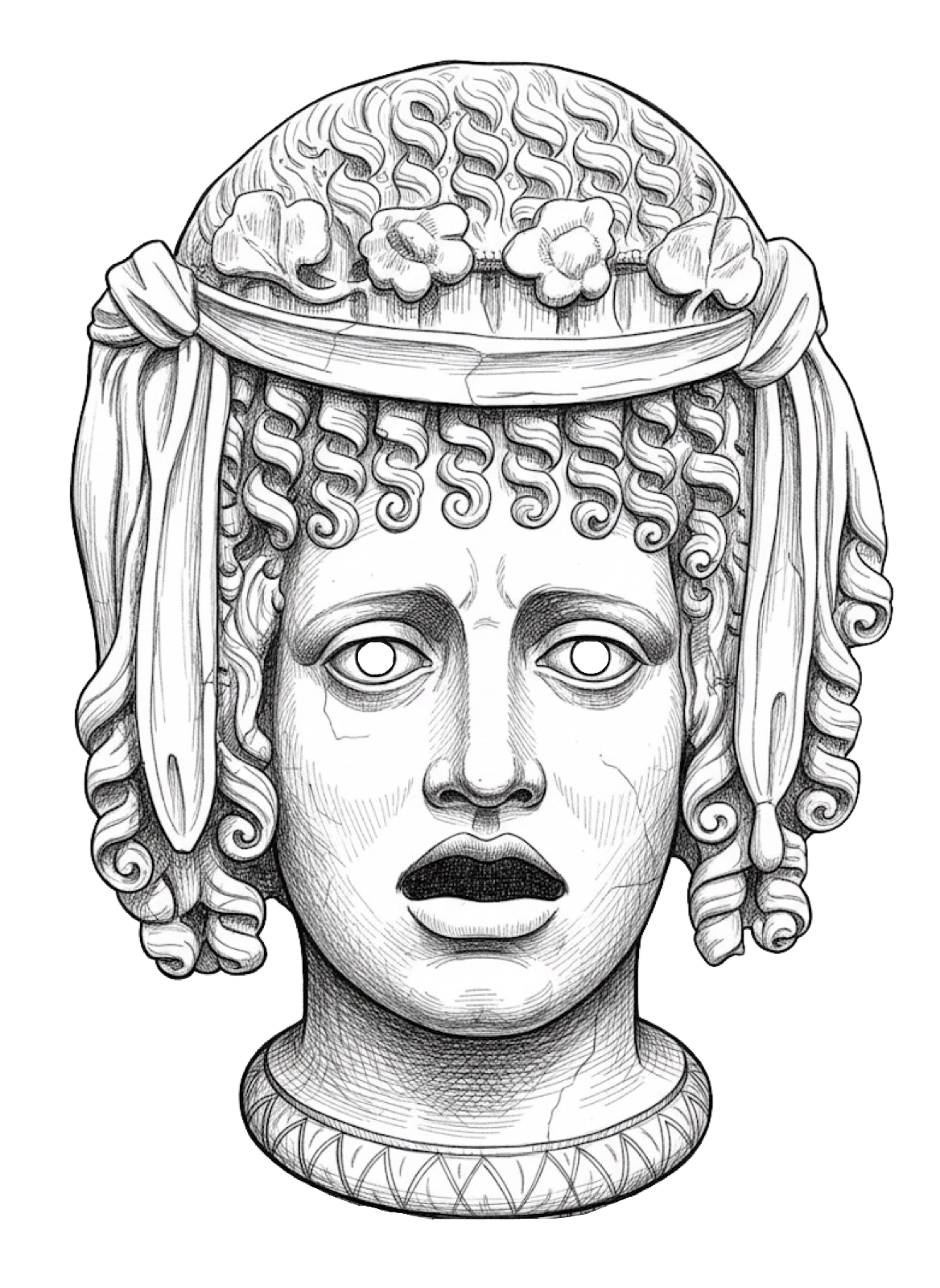
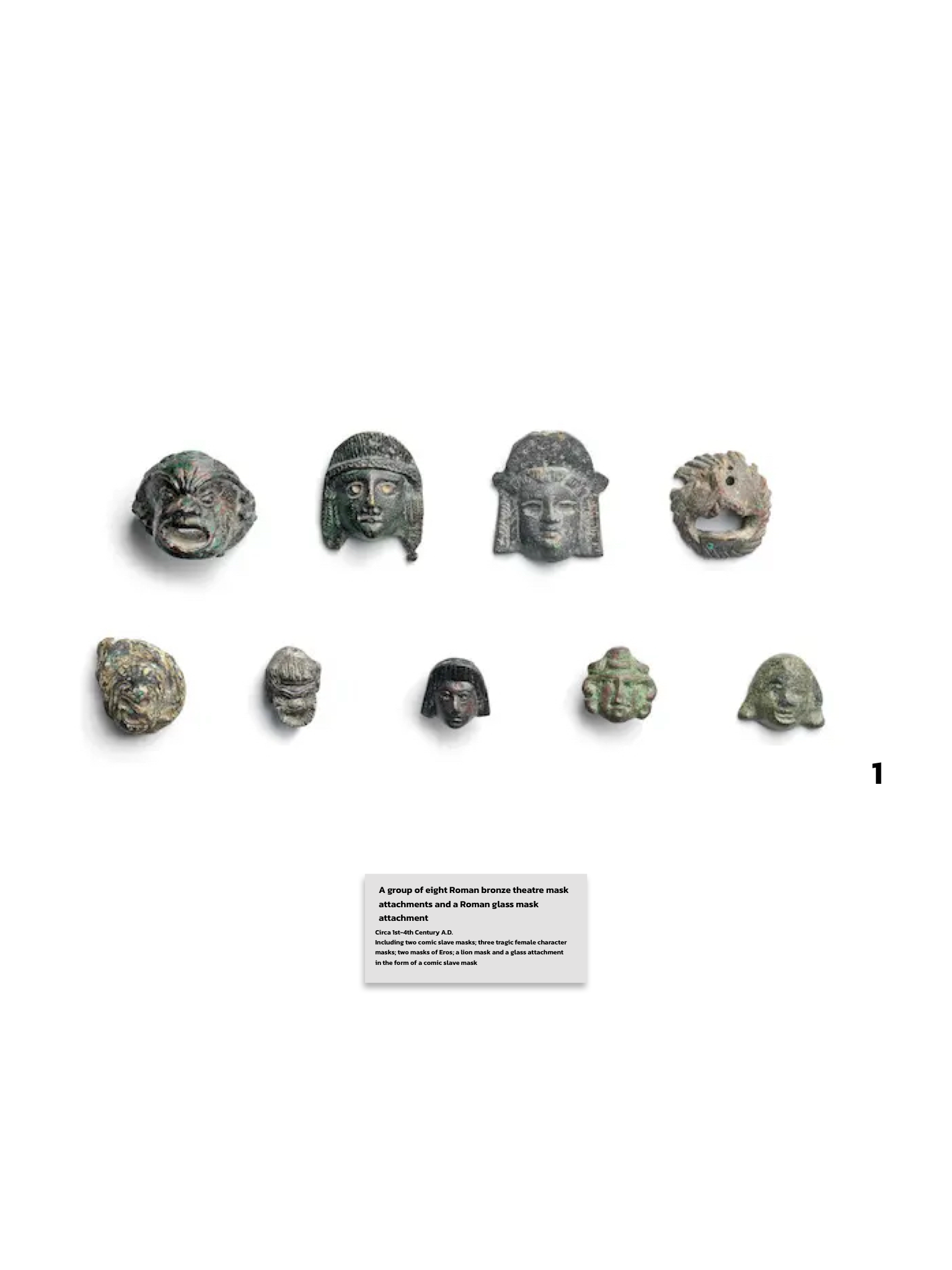
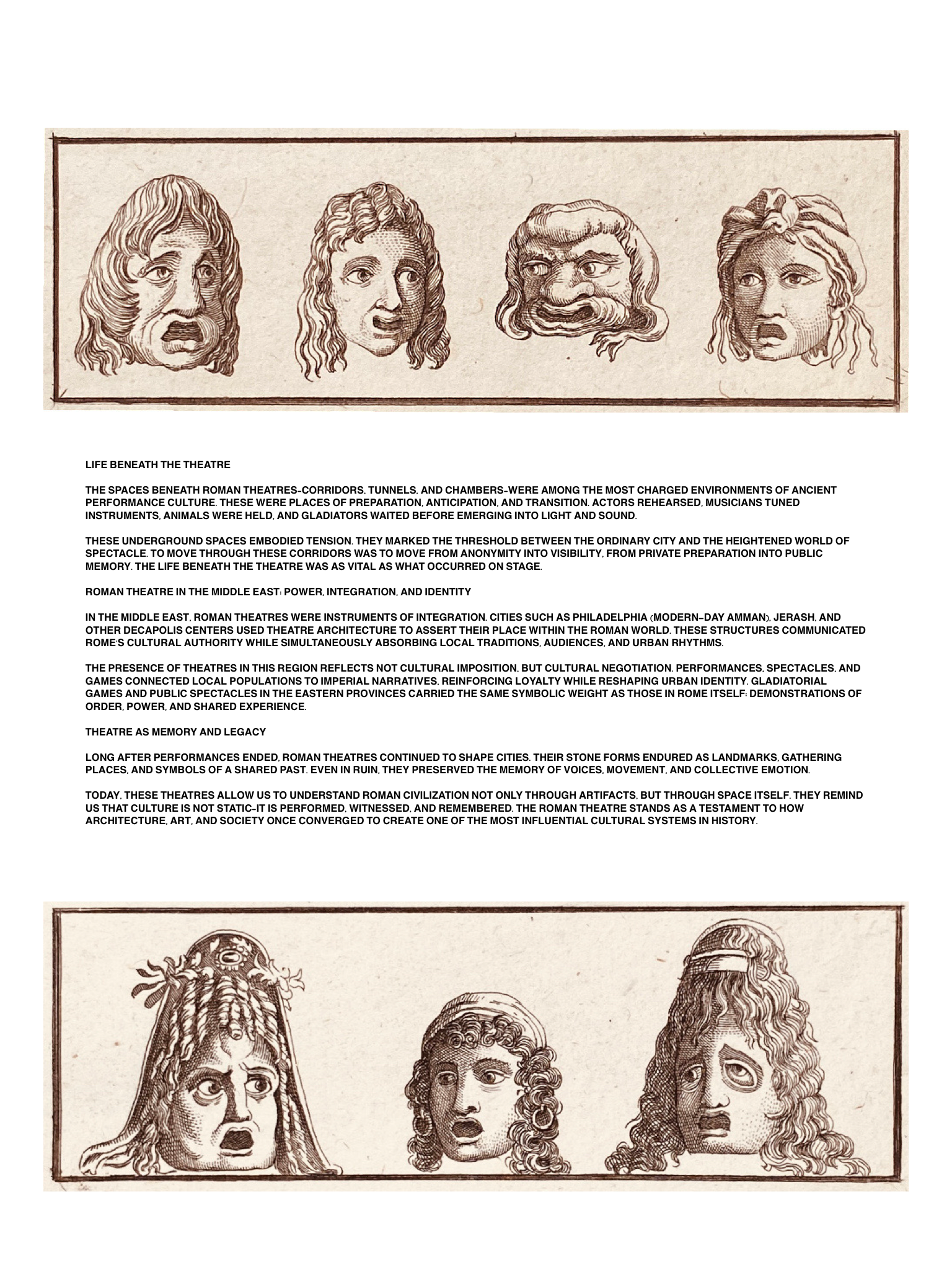
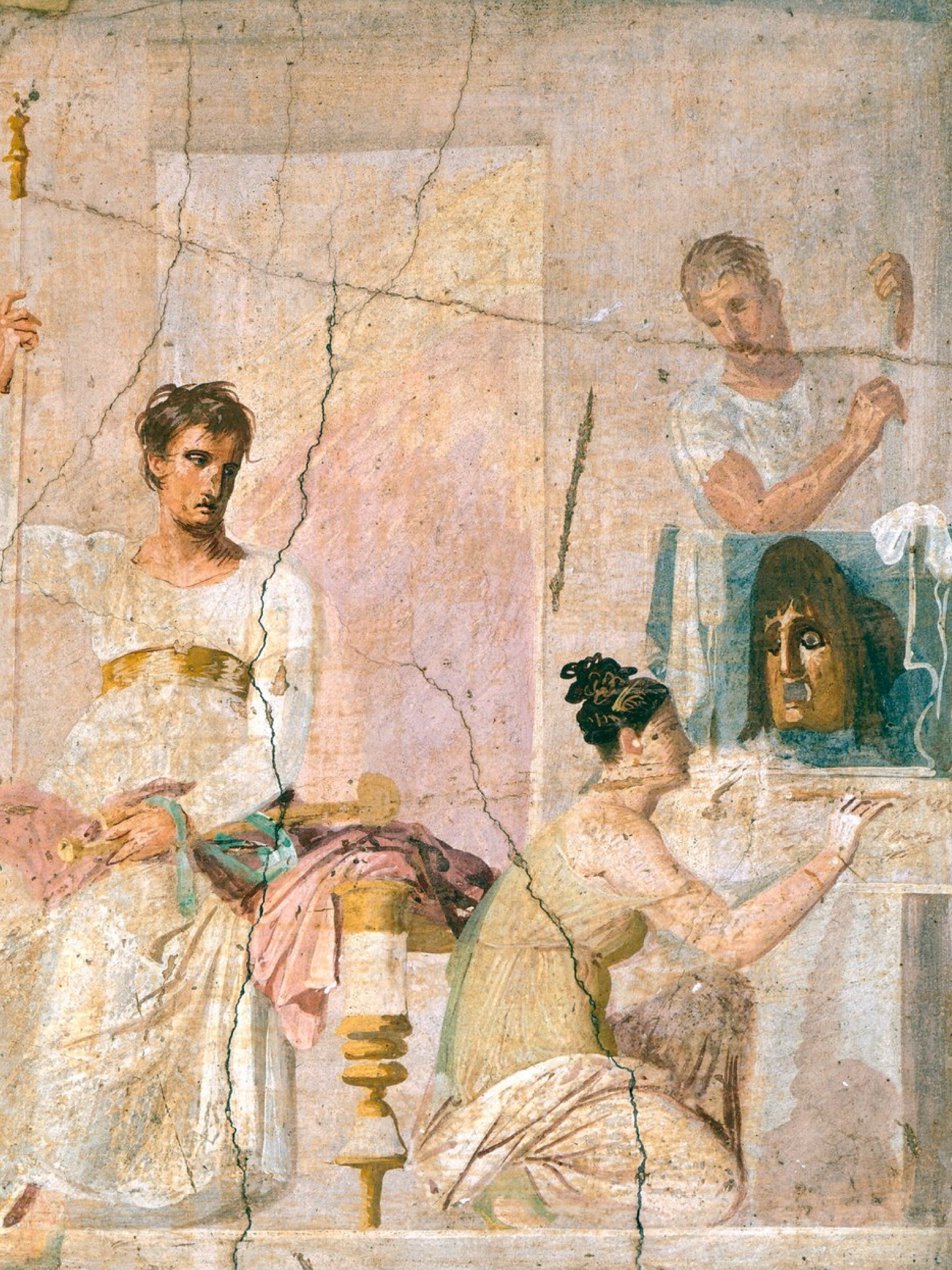
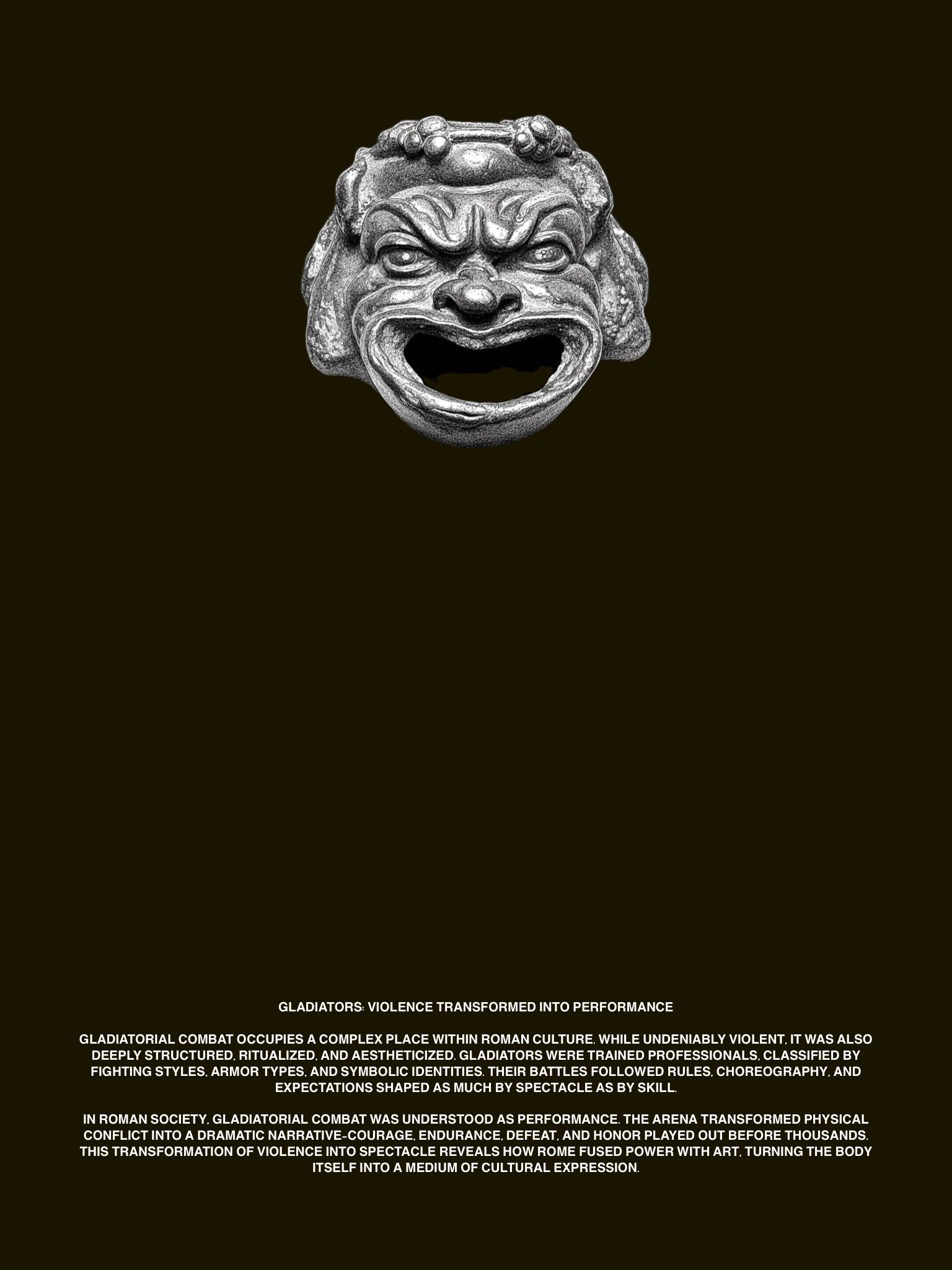
• Masks used in Roman drama and comedy
• Iconography of gods and goddesses linked to performance and entertainment
• Gladiator weapons, armor fragments, or replicas
• Arrowheads, ceremonial objects, and everyday items linked to public spectacles
• Sculptural fragments or reproductions reflecting Roman theatrical iconography
• Interpretive displays explaining:
• How performances were staged
• The role of actors, musicians, gladiators, and animals
• The audience hierarchy and social structure within the theatre
Jordan possesses a rich archaeological record from the Roman period, and this museum could draw from existing collections, replicas, or rotating loans, ensuring authenticity and scholarly credibility.
-
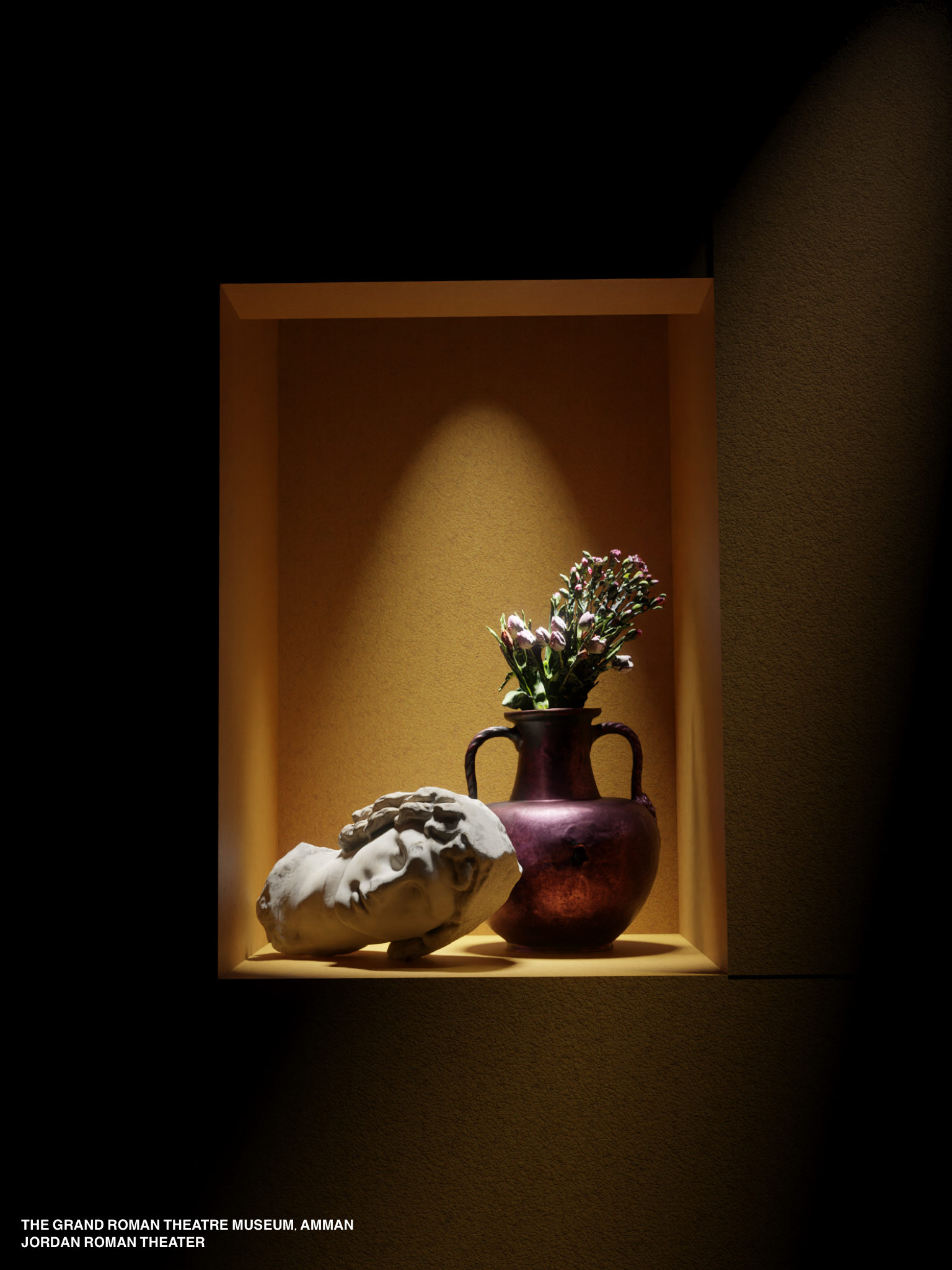
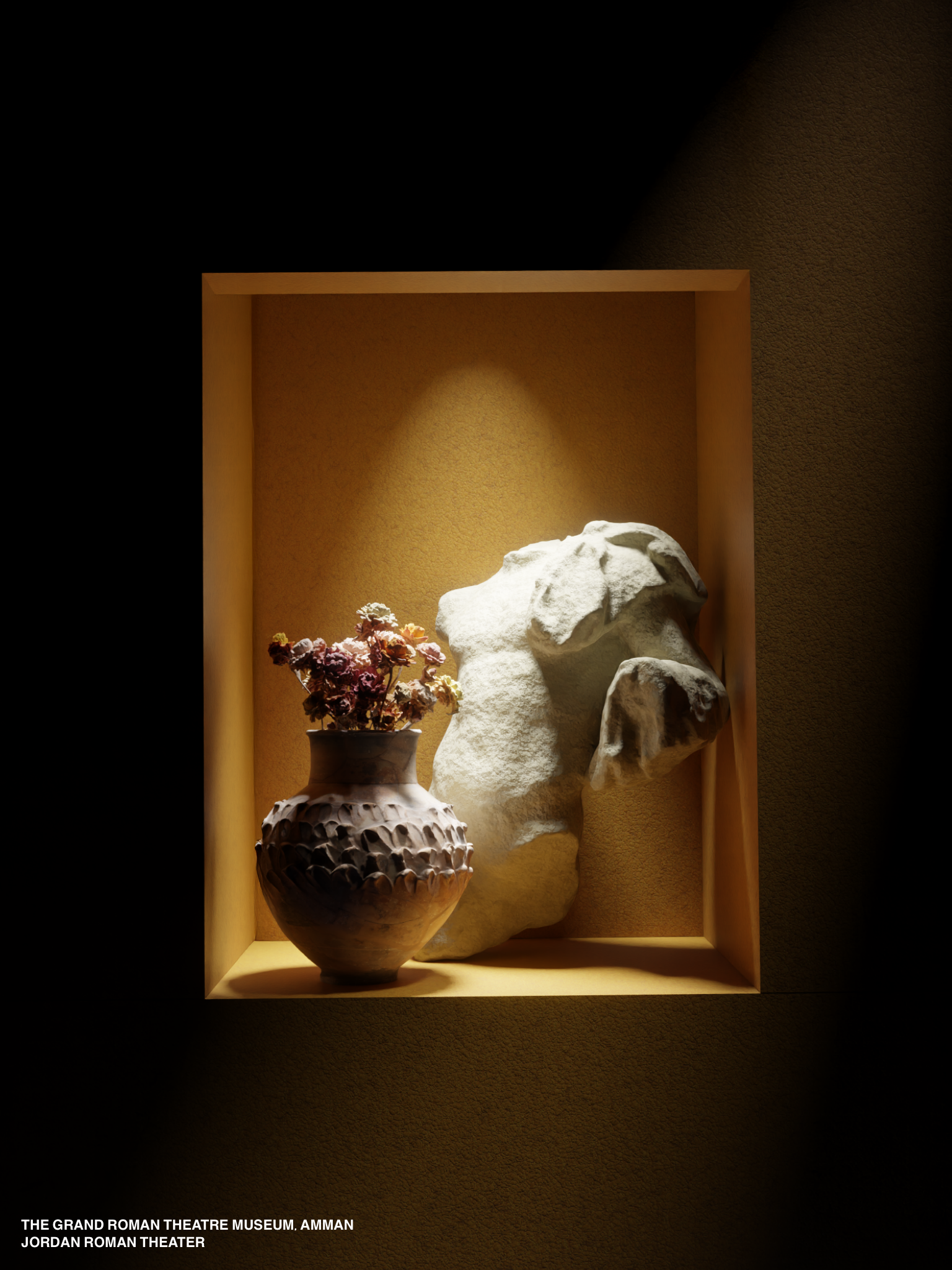
The aim is not to overcrowd the space, but to curate it with restraint, elegance, and clarity, respecting the original architecture of the Roman rooms. Lighting, materials, and graphics would be contemporary, subtle, and immersive—bringing the ancient world to life without theatrical exaggeration.
This museum would serve as:
• An educational platform for locals and students
• A high-quality cultural experience for tourists
• A reference point for archaeological and theatrical heritage in Jordan
-
Introducing a meaningful, site-specific museum would:
• Increase the perceived value of the Roman Theatre visit
• Justify a modest ticket adjustment (e.g. from 0.25 JD to 1 JD for Jordanian visitors)
• Generate sustainable revenue for site maintenance and programming
• Encourage longer visit durations and repeat visits
More importantly, it would elevate the Roman Theatre from a standalone monument to a complete cultural destination.
-
This initiative aligns with:
• Jordan’s archaeological and cultural tourism goals
• International museum and heritage best practices
• A respectful, historically accurate representation of Jordan’s Roman past
It replaces a generic, outdated display with a focused, intellectually honest, and globally relevant museum concept—one that honors both the monument and the visitor.
University of Jordan Alignment & Institutional Value
This project is not positioned as an external cultural proposal seeking temporary academic endorsement. It is conceived as a long-term academic–cultural platform that aligns directly with the University of Jordan’s role as the country’s leading intellectual institution and a regional reference in research, heritage, and public knowledge production.
At its core, the museum redevelopment functions as a living academic laboratory. It transforms heritage from a static display model into an active field of research, conservation practice, museology innovation, and interdisciplinary collaboration. Archaeology, architecture, conservation science, art history, digital heritage, design, tourism studies, and cultural management all intersect within a single, real environment. Few academic settings offer the opportunity for students and researchers to work simultaneously on spatial design, artifact interpretation, exhibition technologies, visitor behavior, and heritage communication inside an internationally significant Roman monument. This positions the University not merely as an observer of heritage, but as an active producer of new museum knowledge in the Middle East.
The project also strengthens the University’s public intellectual role. By participating in the transformation of a national monument into a contemporary museum model, the University becomes visibly connected to cultural leadership, not only academic instruction. It demonstrates that the institution contributes directly to how history is interpreted, presented, and experienced by society. This reinforces the University’s identity as a guardian of national heritage while also projecting it internationally as a forward-thinking academic body engaged in modern museological standards rather than traditional preservation alone.
On an institutional level, the collaboration creates a sustained framework for student training, supervised research projects, thesis work, and field experience. Instead of simulations or theoretical case studies, students engage with real artifacts, real spatial constraints, real conservation questions, and real audiences. This raises the academic value of programs connected to archaeology, architecture, and heritage sciences, making them more competitive, more applied, and more visible to international academic partners.
The University also benefits reputationally. Cultural infrastructure projects tied to universities often become long-term symbols of institutional impact beyond campus boundaries. By being associated with the modernization of one of Jordan’s most iconic historical sites, the University of Jordan positions itself as a bridge between scholarship, public culture, and national identity. This enhances opportunities for international collaborations, research funding, cultural grants, and academic exchanges linked to heritage innovation.
Finally, the project aligns with the University’s broader mission of knowledge production and societal contribution. It shows that academic expertise does not remain confined to classrooms and publications, but actively shapes how a nation understands its past and presents it to the world. In this sense, the museum is not only a cultural space — it becomes an extension of the University itself: a public-facing academic platform where research, education, and heritage meet.
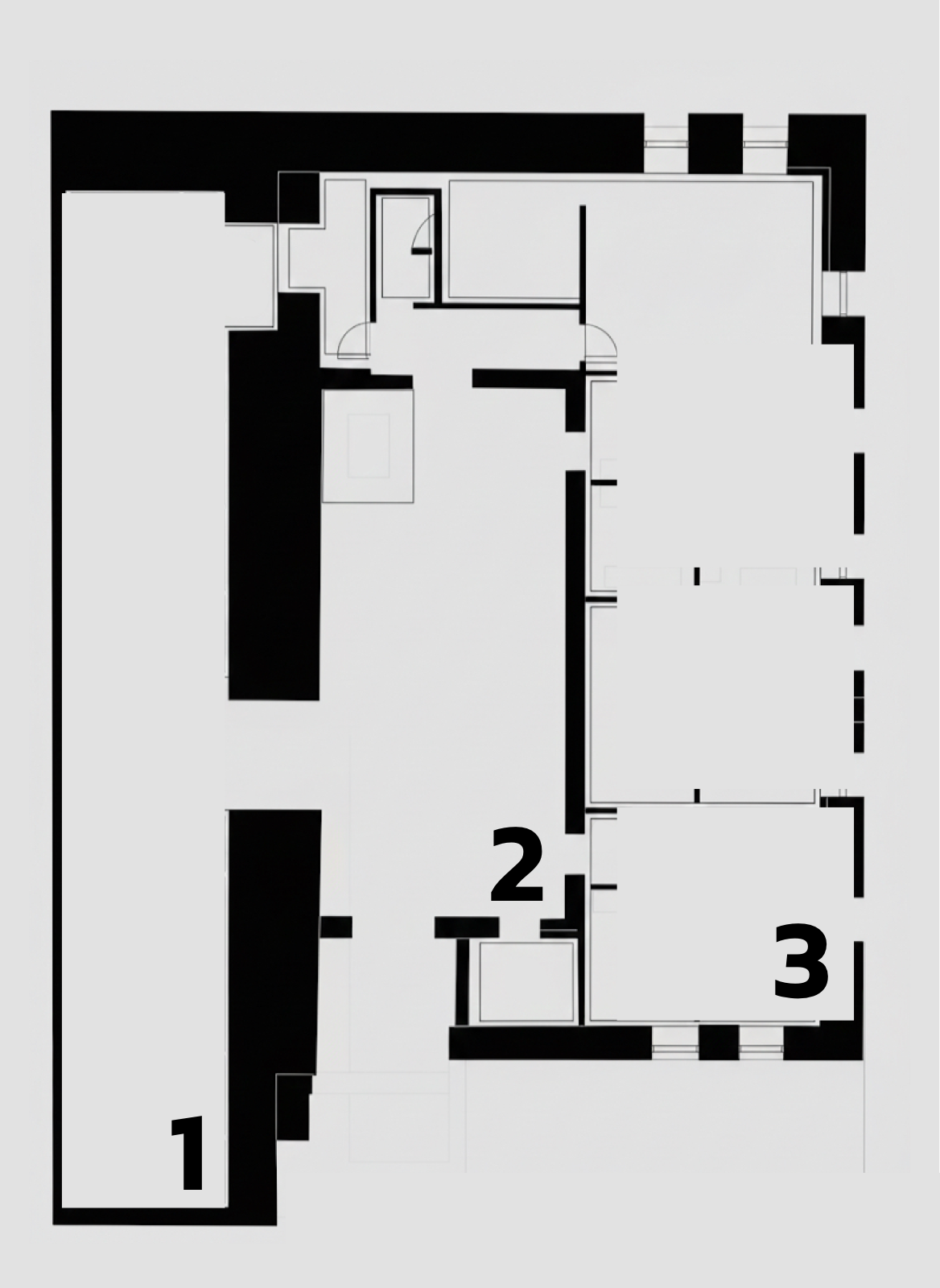
HISTORICAL ANCHOR (VERY IMPORTANT – FOR CREDIBILITY)
The underground corridors and rooms beneath Roman theatres were typically used for:
• Circulation (performers, animals, stage crews)
• Holding and preparation spaces (actors, gladiators, musicians)
• Mechanical access (stage machinery, lifts, trapdoors)
• Processional movement before emergence into the arena
-
“Beneath the Theatre: Power, Art, and Anticipation”
This is the emotional engine of the museum.
Core Narrative
This corridor represents life beneath the stage — the world of performers, gladiators, animals, and ritual preparation. It is not documentary; it is experiential and symbolic.
This space communicates:
• Roman might
• Discipline and ritual
• Performance as art
• Violence transformed into culture
Not brutality — aestheticized power.
Spatial & Sensory Strategy
• Low, directional lighting
• Controlled darkness that pulls the visitor forward
• Strong axial symmetry
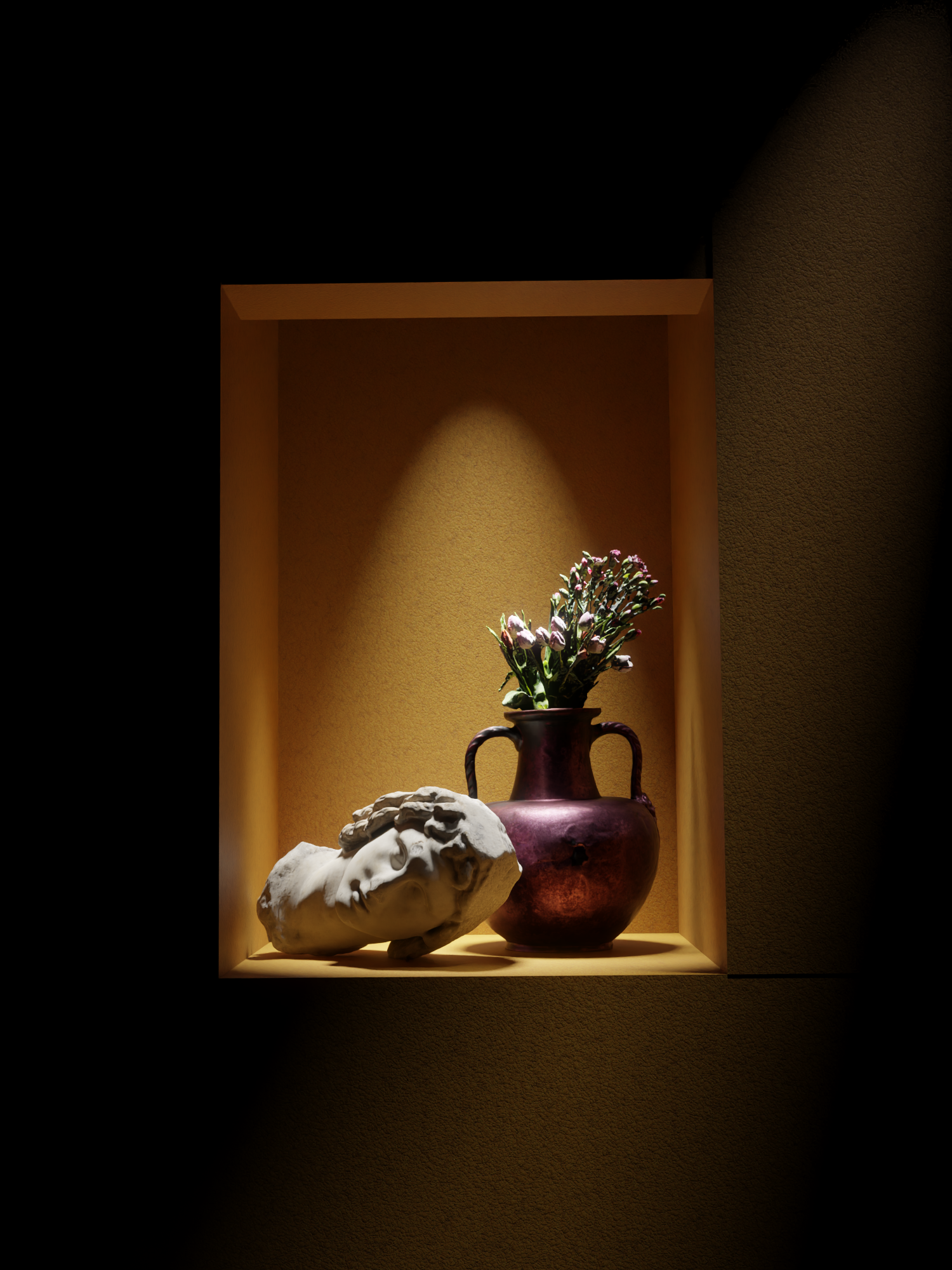
• A focal point at the end (statue / sculptural fragment / symbolic figure)
• Silence, or very low ambient resonance (optional, not theatrical)
The lighting should never explain everything.
It should make people search.
Artifact & Object Language
You are right: the sky is the limit, but curation must be selective.
Appropriate here:
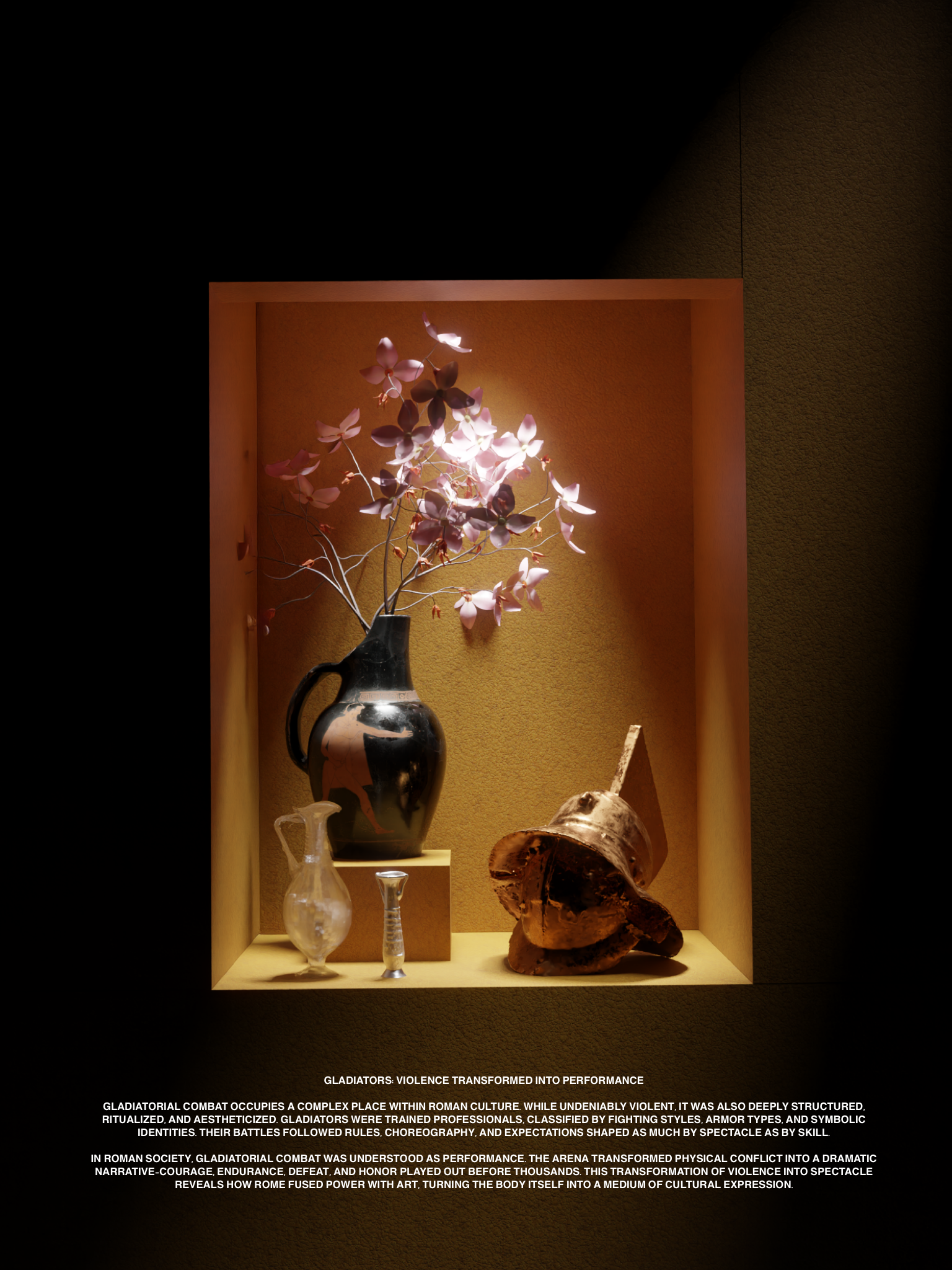
• Gladiator helmets (especially decorative or class-specific types)
• Swords, daggers, shields (museum-grade or replicas)
• Arrowheads and weapon fragments
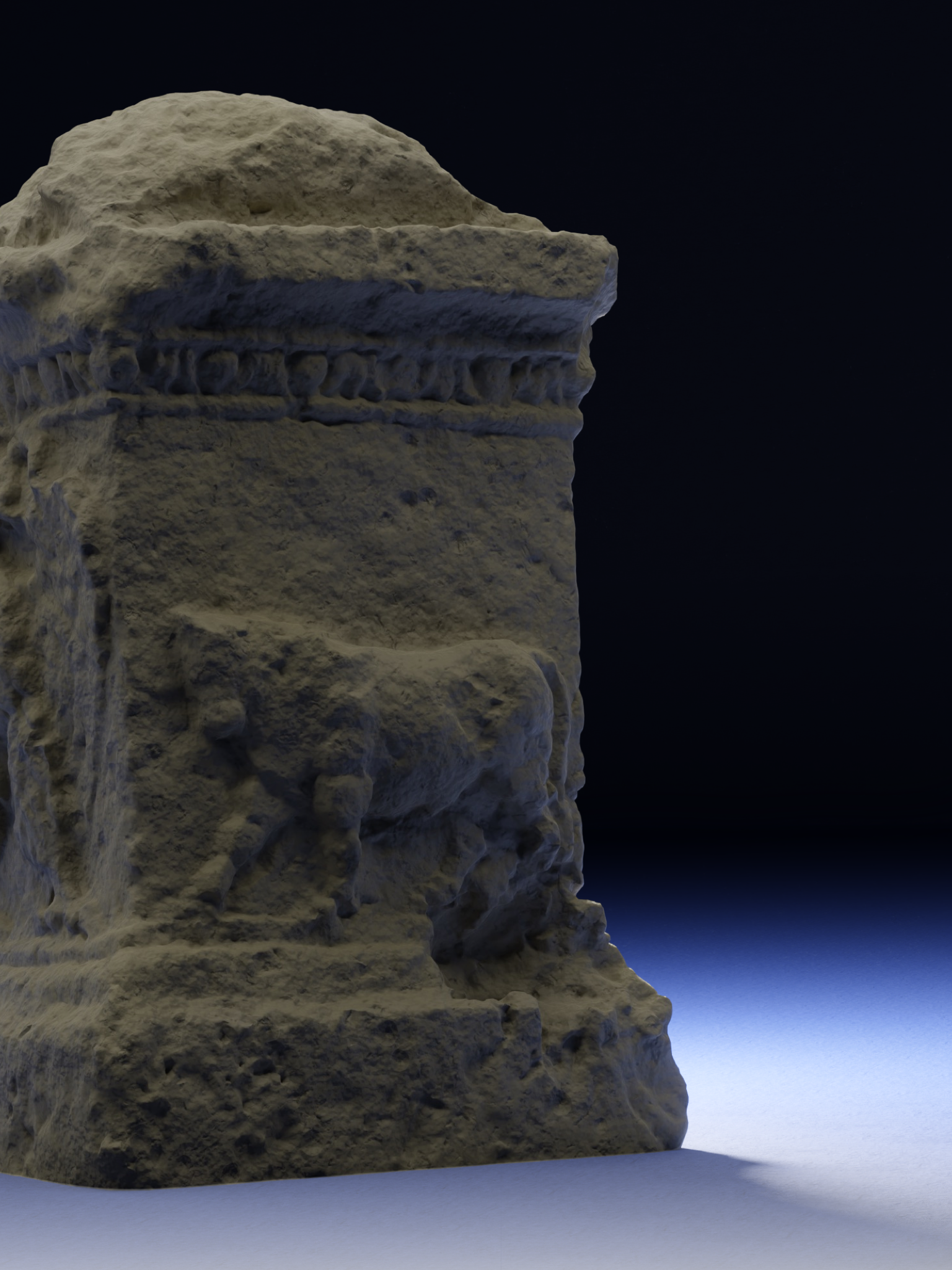
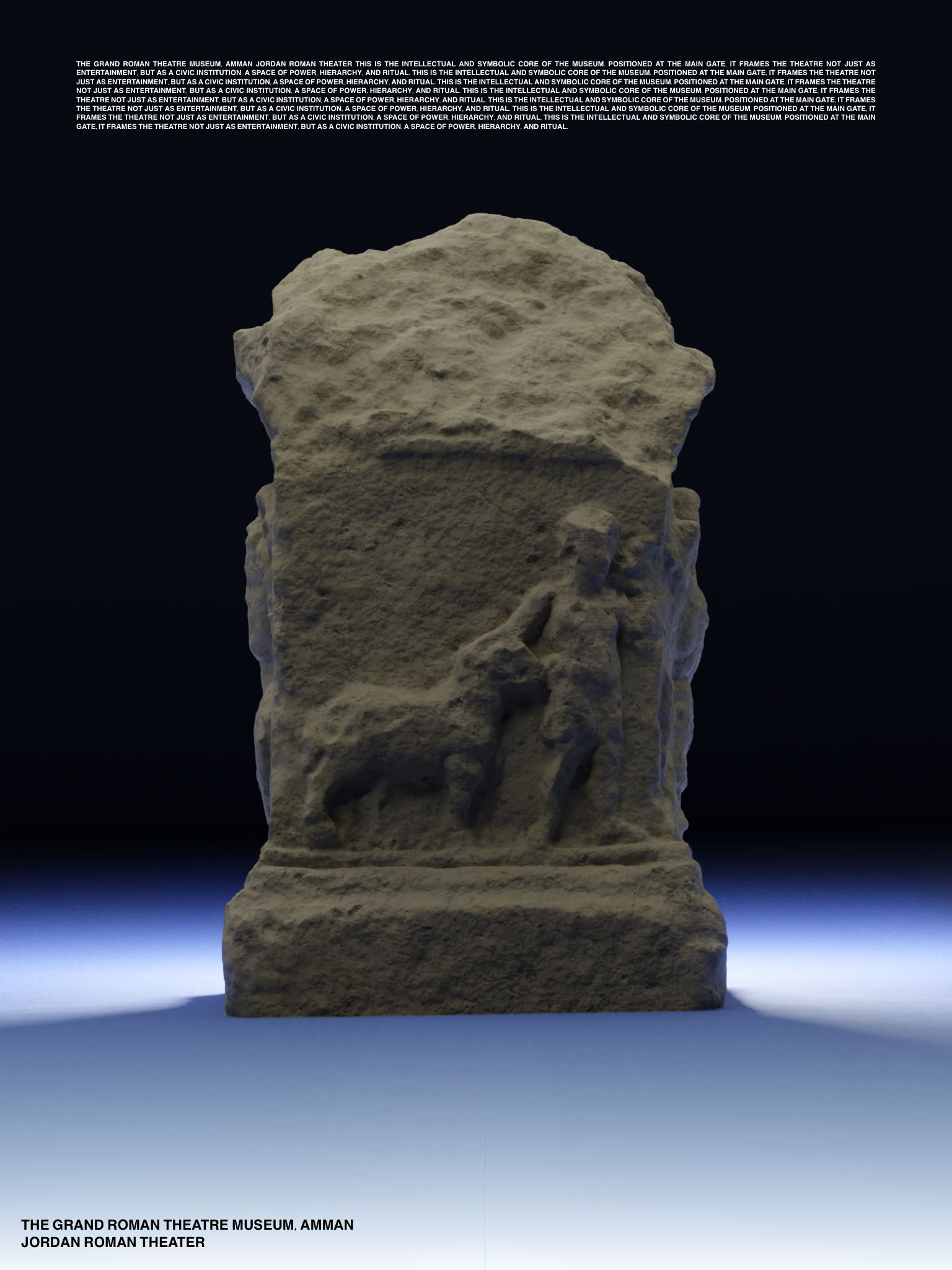
• Reliefs or fragments depicting combat or spectacle
• Theatre masks (dramatic and symbolic)
• Mosaic fragments or fresco remnants
• Tesserae (admission tokens)
• Bronze elements or fittings
No clutter.
Each object should feel like it belongs to a ritual.
End-of-Corridor Moment
At the termination point:
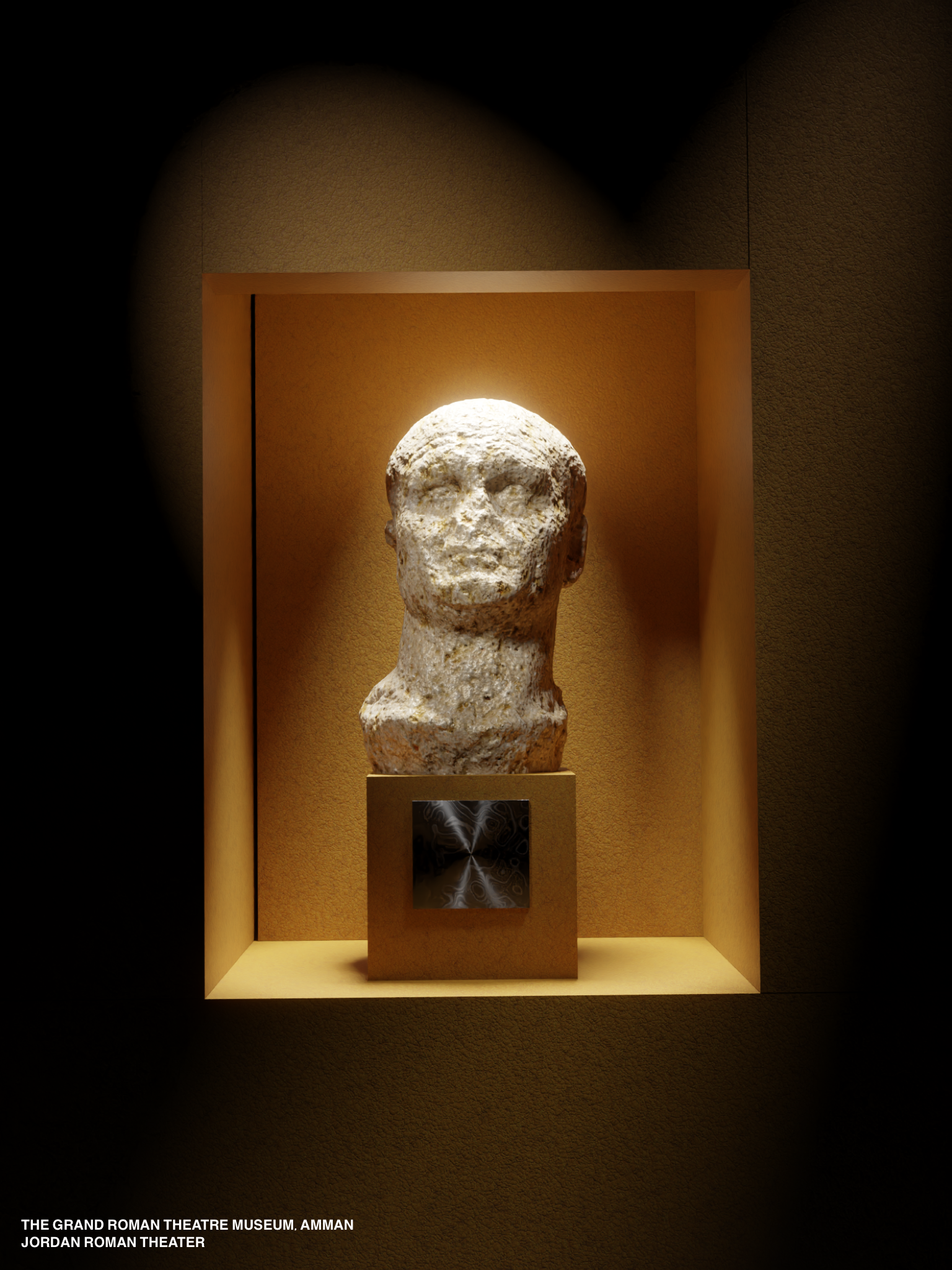
• A statue, relief, or symbolic form
• Single spotlight
• Absolute compositional clarity
This is the moment that gives visitors goosebumps.
This corridor should feel like the last place you stand before stepping into history.
-
“The Theatre as Institution”
This room resets the visitor intellectually.
Core Role
This is not a heavy artifact room.
It is a conceptual anchor.
It answers:
• What is this place?
• Why does this theatre matter?
• How does everything connect?
Narrative Focus
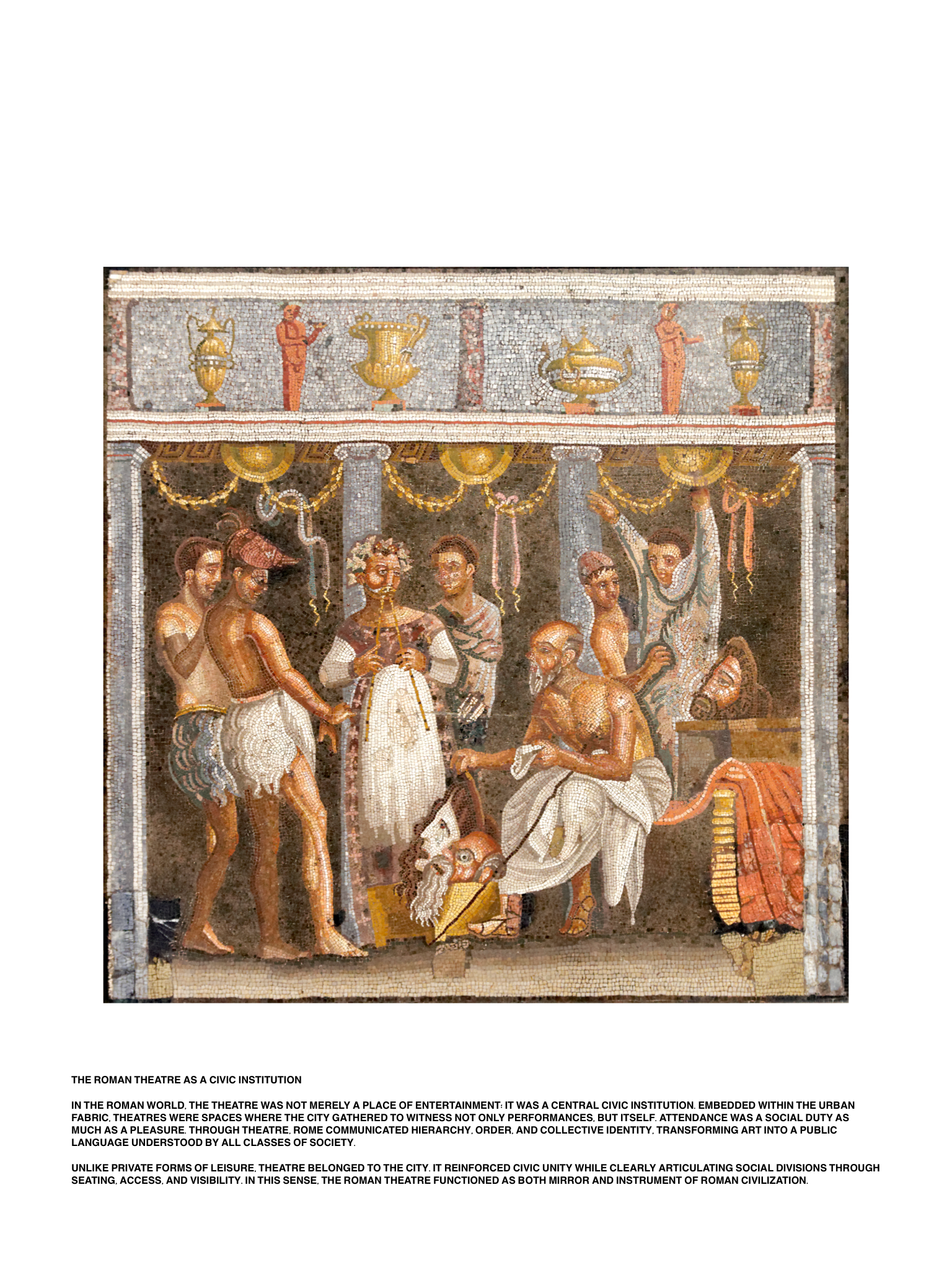
• Roman theatre as civic institution
• Public ritual, authority, and collective experience
• Philadelphia (Amman) as a Roman city, not a peripheral site
Display Strategy
• One central visual or sculptural reference (model, relief, map)
• Clear diagrams:
• Seating hierarchy
• Relationship between stage, city, and audience
• Minimal objects, maximum clarity
Design Tone
• Balanced light
• Calm, authoritative
• No shock, no spectacle
This is where the visitor understands before continuing.
Think of it as:
The mind of the museum.
-
“Philadelphia: Life, Culture, and the Roman World”
This is where the museum expands beyond the theatre without losing focus.
Core Narrative
If the corridor is emotion
and the central hall is meaning,
these rooms are context and material proof.
Content Direction
These rooms explore:
• Roman Philadelphia as a living city
• Greco-Roman aesthetics and daily life
• Architecture, decoration, and craft
• How theatre fit into a broader urban and cultural system
Appropriate Displays
• Marble architectural fragments
• Columns or column sections (if available)
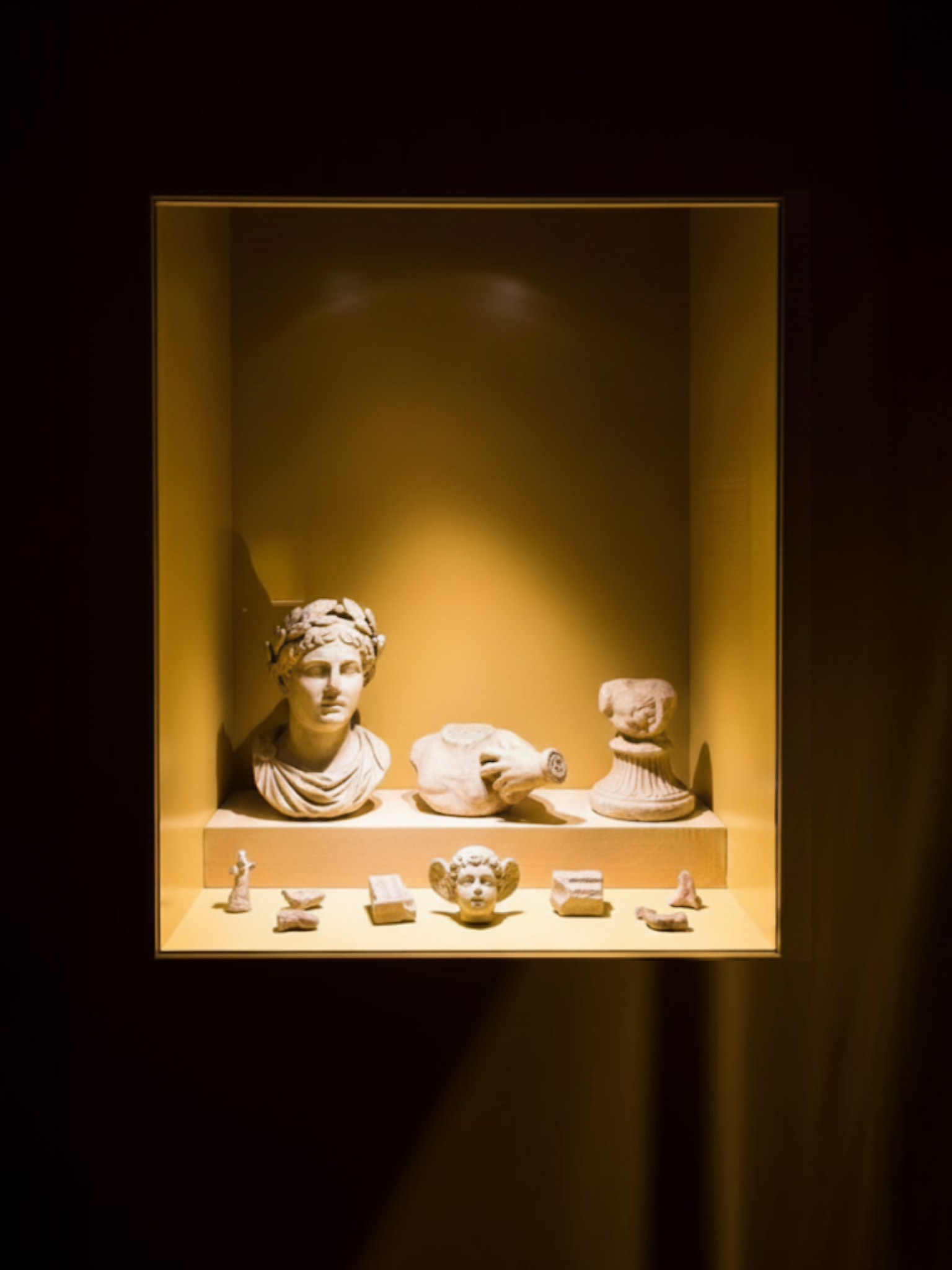
• Sculptural fragments
• Domestic and civic artifacts
• Decorative elements
• Coins, inscriptions, everyday objects
This is where archaeology breathes.
Optional Sub-Themes
• The Decapolis network
• Artisans and craftsmanship
• Roman aesthetics in Jordan
Design Tone
• More open
• Slightly brighter than the corridor
• Emphasis on material, texture, stone, weight
This space reassures scholars, officials, and donors:
This is a serious archaeological institution.
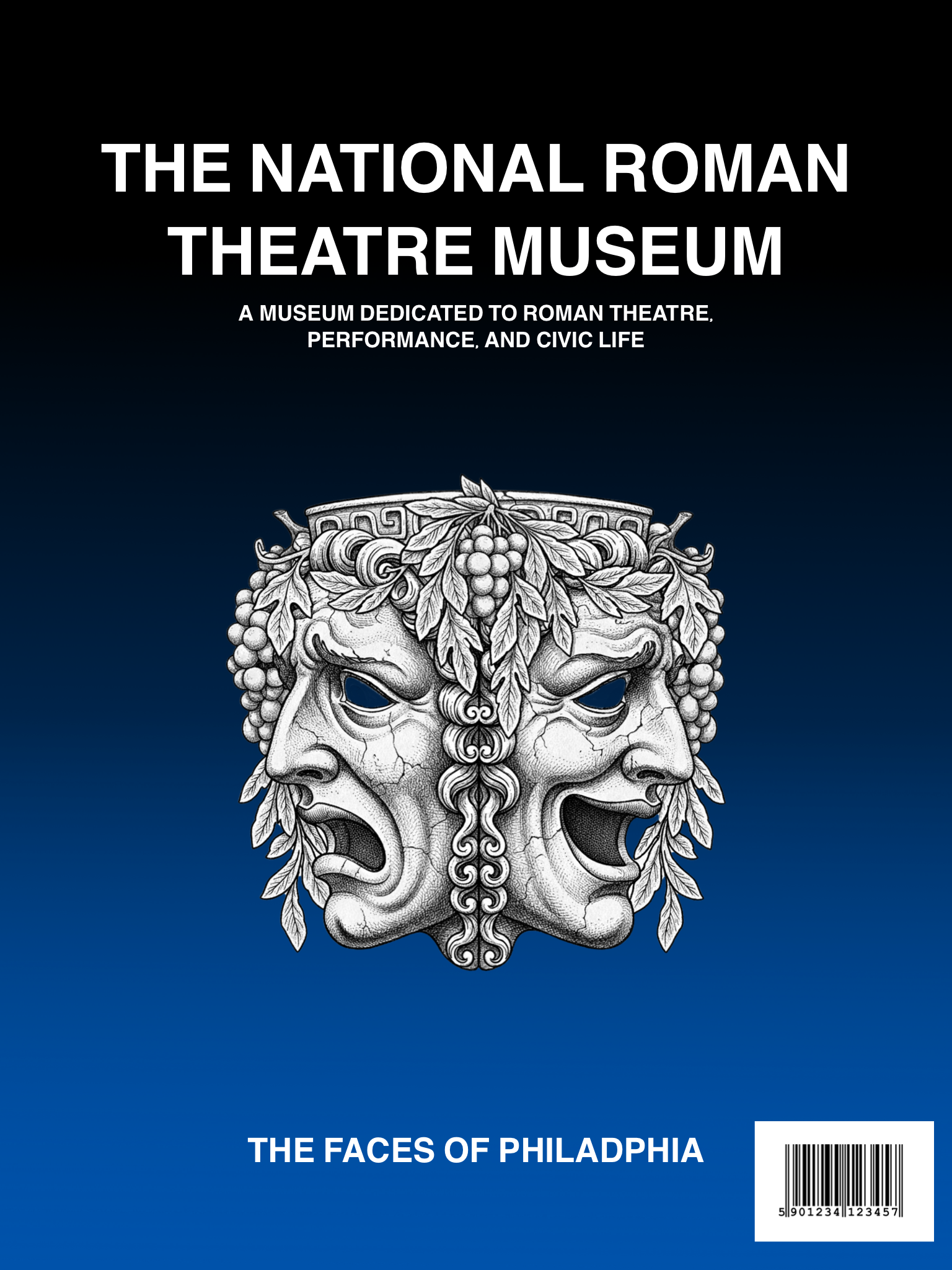
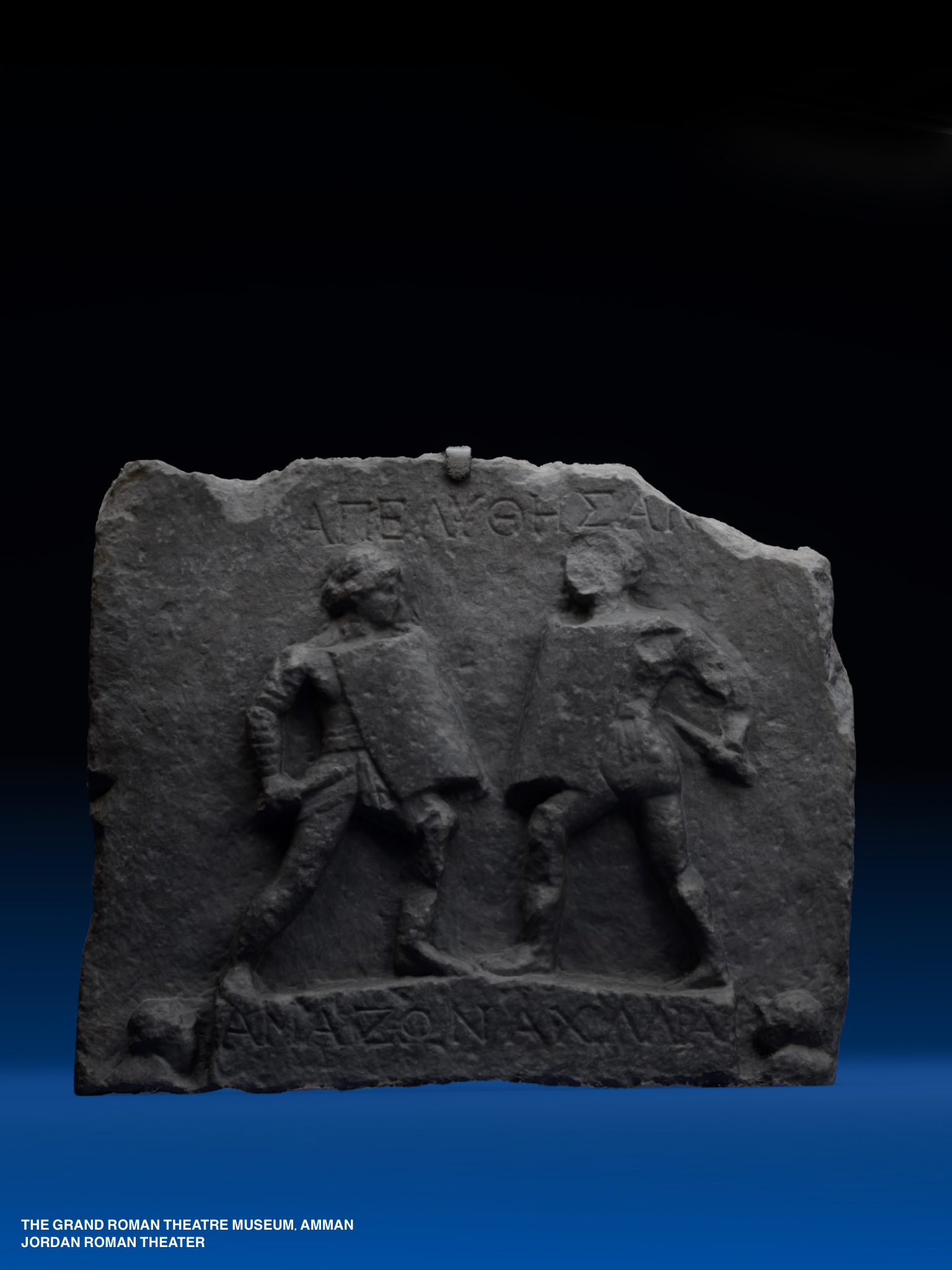
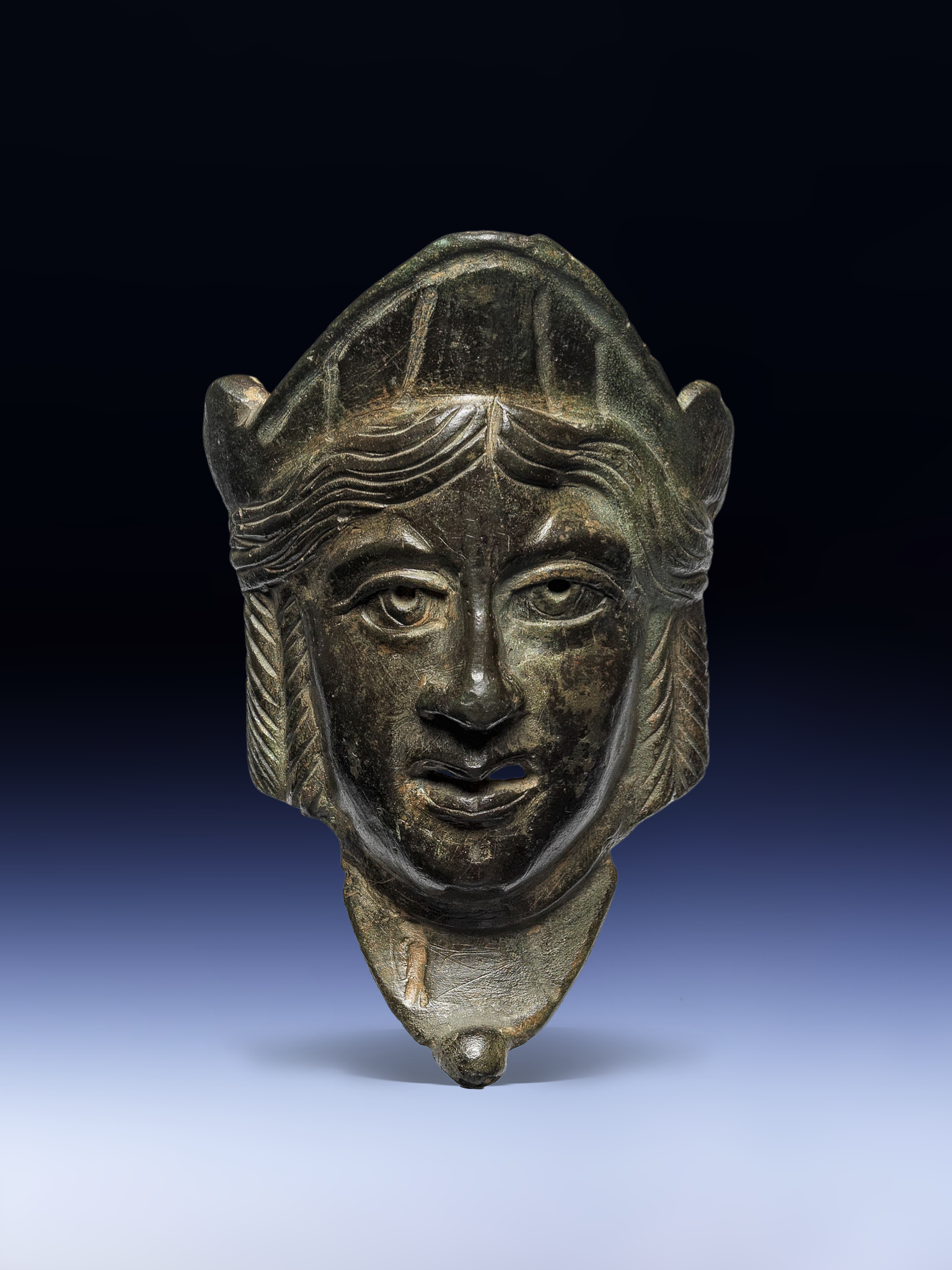
The Transformation Framework
The Transformation Framework
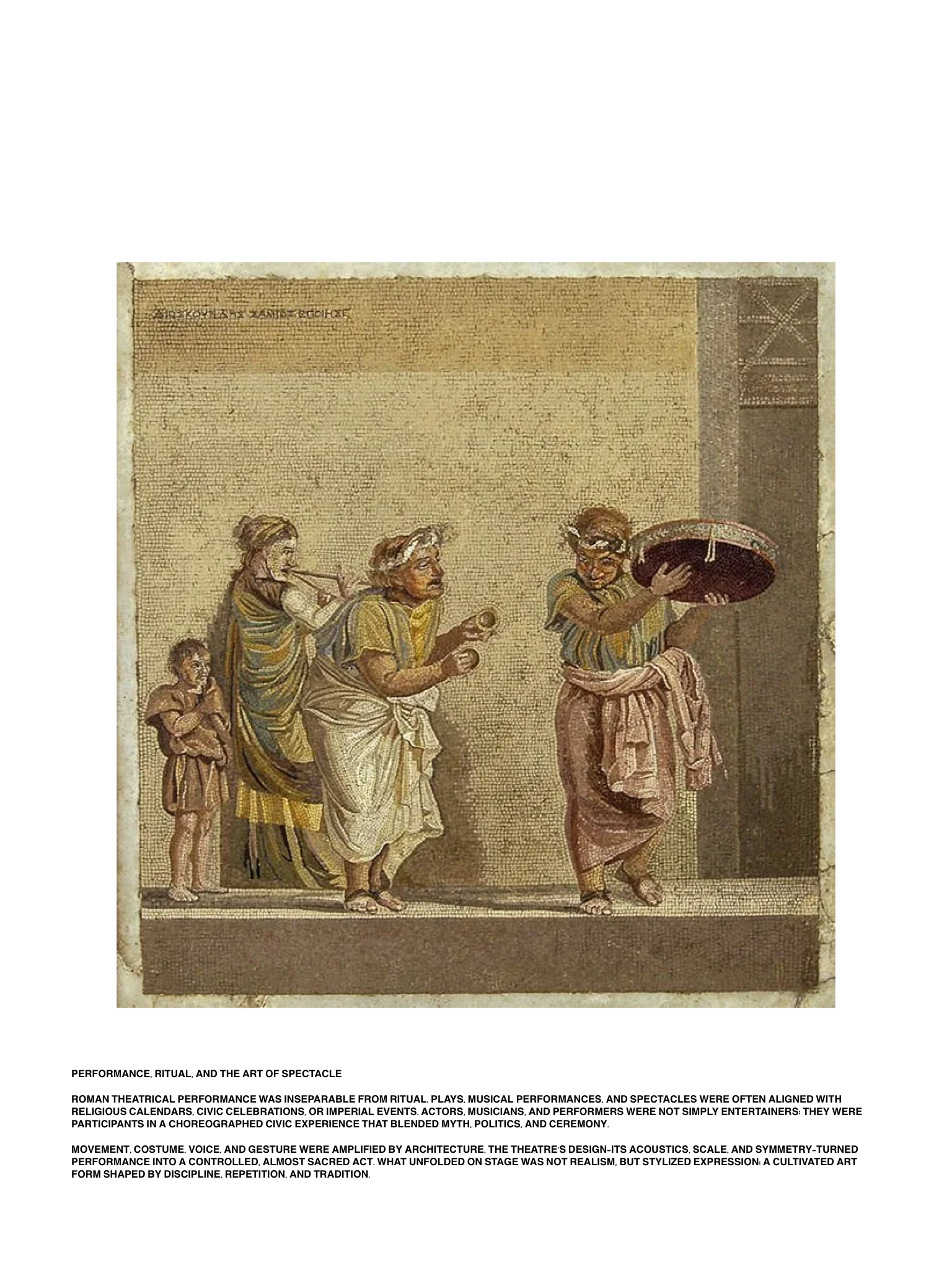
The foundation of the initiative lies in a rigorous research and interpretation phase. This stage focuses on understanding the Roman Theatre of Amman as a functional, cultural, and civic structure rather than as an isolated monument. Historical research, archaeological records, performance studies, and regional Roman history inform a new narrative framework rooted in authenticity and academic credibility.
This phase establishes the intellectual direction of the museum, defining key themes such as performance, spectacle, civic ritual, and urban life in Roman Philadelphia. It ensures that every future intervention—visual, spatial, or educational—emerges from a coherent interpretive vision.
Curatorial Reorientation and Content Selection
This pillar centers on redefining what is displayed and why. The initiative shifts away from generalized folkloric representation toward a focused, site-specific curatorial approach. Artifacts, replicas, reliefs, and visual materials are selected based on their relevance to Roman theatre, performance culture, and public life.
Where original objects are limited, interpretive strategies—including high-quality replicas, architectural fragments, and visual reconstructions—are employed to complete the narrative without compromising scholarly integrity. The emphasis remains on meaning, context, and clarity rather than quantity.
Collaborative Cultural Engagement
The transformation is conceived as a collaborative cultural process. Archaeologists, historians, curators, designers, artists, and cultural practitioners are invited to contribute knowledge, skills, and perspectives. Academic institutions, local experts, and international advisors may participate through research input, peer review, or voluntary collaboration.
This approach positions the museum not as a closed institution, but as a shared national project—one that values expertise, dialogue, and collective cultural ownership.
Spatial Reconfiguration and Experiential Design
Rather than altering the historic architecture, the initiative reinterprets the existing spaces through light, material, narrative sequencing, and controlled display design. Each room type—the corridor, the central hall, and the inner rooms—is assigned a distinct interpretive role within a unified visitor journey.
The design strategy prioritizes atmosphere, restraint, and emotional engagement. The goal is to create an experience that is immersive without being theatrical, powerful without spectacle, and intellectually grounded without being didactic.
Financial and Economic Impact
The transformation of the existing museum into the National Roman Theatre Museum – Amman presents a measurable cultural and economic advantage for the public sector. By repositioning the Roman Theatre as a complete cultural destination rather than a single monument, the initiative increases both the perceived and actual value of the site.
A focused, high-quality museum experience encourages higher visitation rates, longer dwell times, and repeat visits. Permanent displays provide continuity and institutional identity, while temporary or rotating exhibitions introduce flexibility, allowing the museum to renew interest without significant structural investment. This balance supports sustained visitor engagement throughout the year rather than seasonal peaks alone.
From a revenue perspective, the enhanced experience justifies a modest and socially acceptable adjustment to ticket pricing, particularly when paired with clear educational and cultural value. Even small increases in ticket revenue, when multiplied across high visitor volumes, contribute directly to site maintenance, conservation efforts, and programming without placing strain on public budgets.
The initiative also strengthens the Roman Theatre’s position within Jordan’s cultural tourism ecosystem. As one of the most accessible and recognizable archaeological sites in the capital, the theatre has the potential to function as a gateway museum—introducing visitors to Roman heritage in Jordan and encouraging further travel to sites such as Jerash, Umm Qais, and other Decapolis cities. This cascading effect supports broader tourism circulation and economic activity.
Operationally, the museum creates opportunities for employment, professional collaboration, and cultural services, including curation, education, conservation, and design. These activities contribute to capacity-building within the cultural sector while reducing reliance on external or short-term interventions.
Most importantly, the initiative represents a cost-effective investment. It leverages existing architecture, infrastructure, and collections, minimizing capital expenditure while maximizing cultural and economic return. The result is a sustainable model in which heritage preservation, public engagement, and financial responsibility reinforce one another.
By elevating the Roman Theatre Museum to national and international standards, the project positions it as a long-term asset—one capable of generating cultural value, public trust, and economic benefit for years to come.
Curatorial Strategy and Display Methodology
The curatorial approach of the National Roman Theatre Museum – Amman is shaped by both opportunity and constraint. As a site-specific museum housed within the Roman Theatre itself, the initiative does not rely on the acquisition or relocation of large monumental artifacts. Instead, it adopts a focused strategy that prioritizes meaning, material presence, and visitor experience over scale.
Emphasis on Small-Scale Archaeological Material
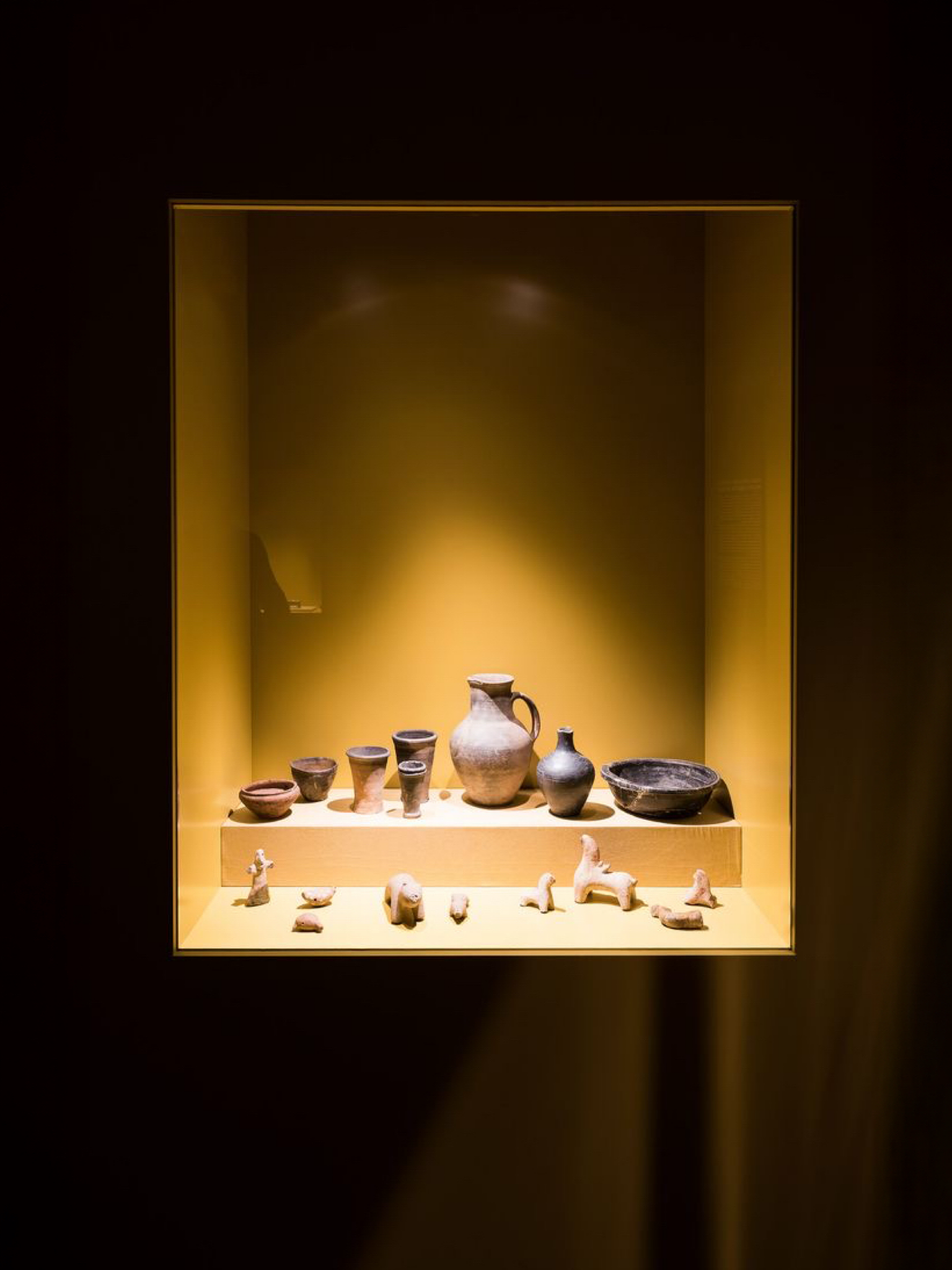
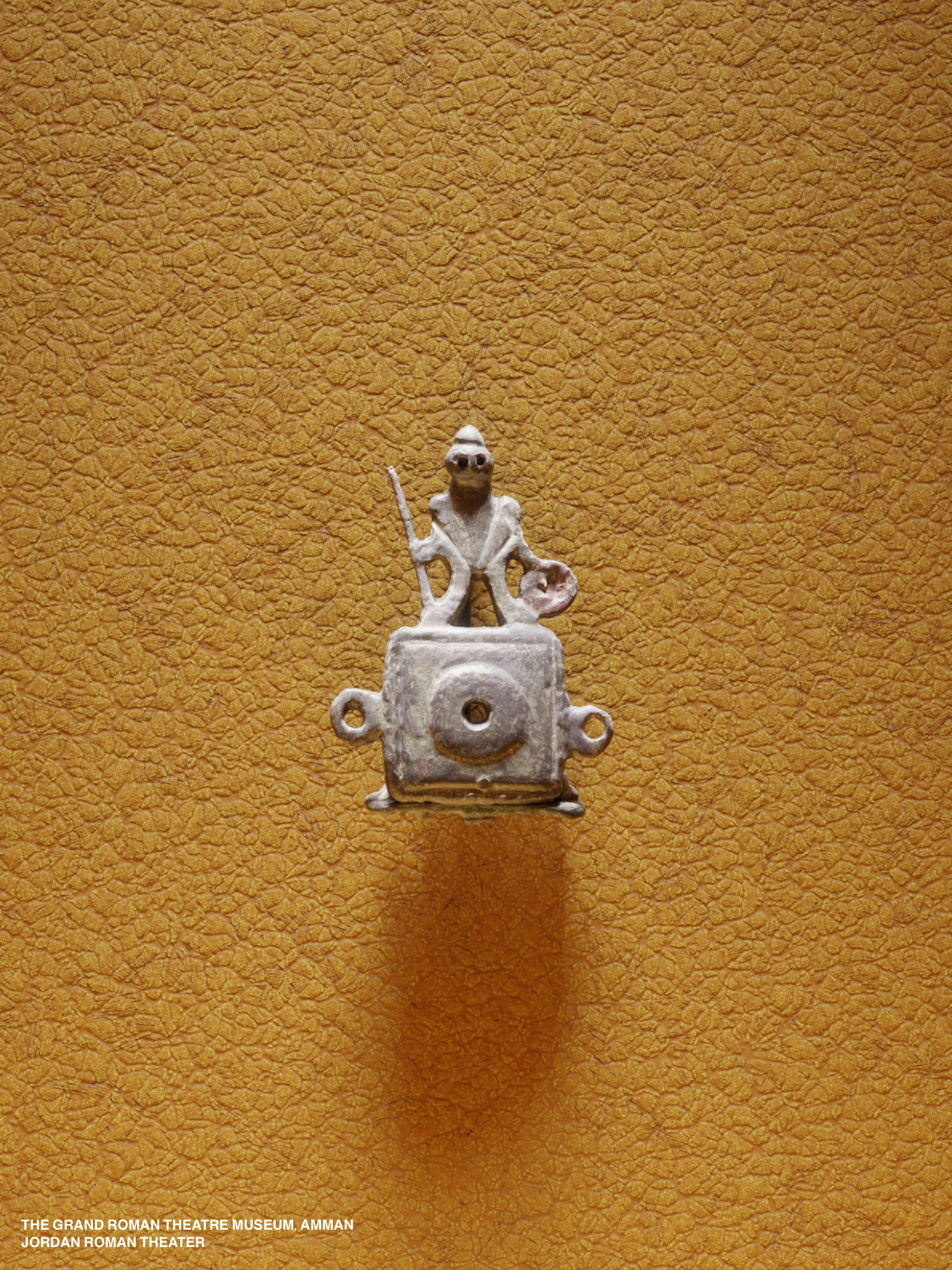
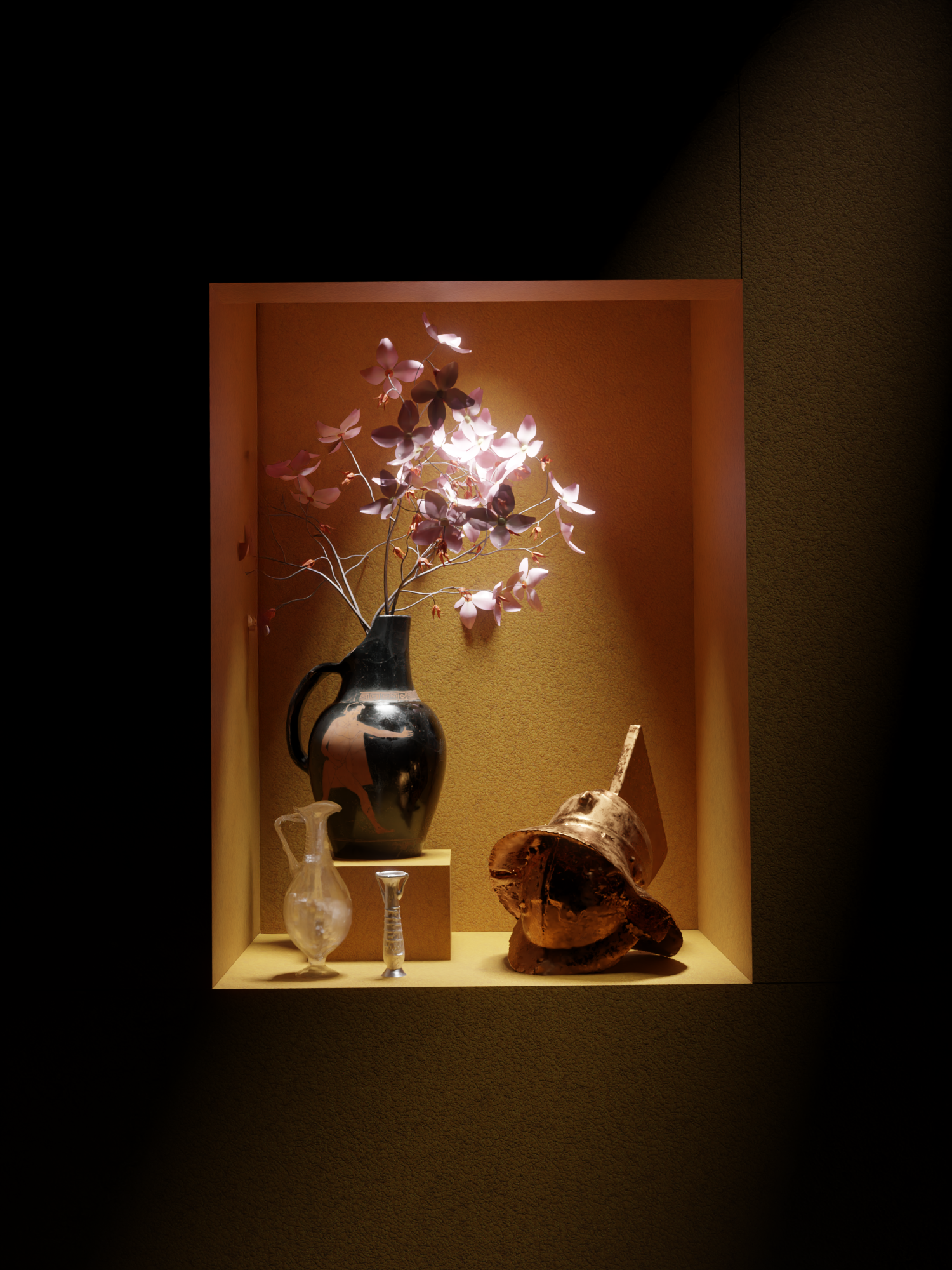
Given the practical and institutional limitations associated with large artifacts, the museum places deliberate emphasis on small and medium-scale archaeological material. These include pottery fragments, marble shards, bronze pieces, architectural details, brooches, arrowheads, coins, tesserae, and other objects commonly recovered through archaeological excavation.
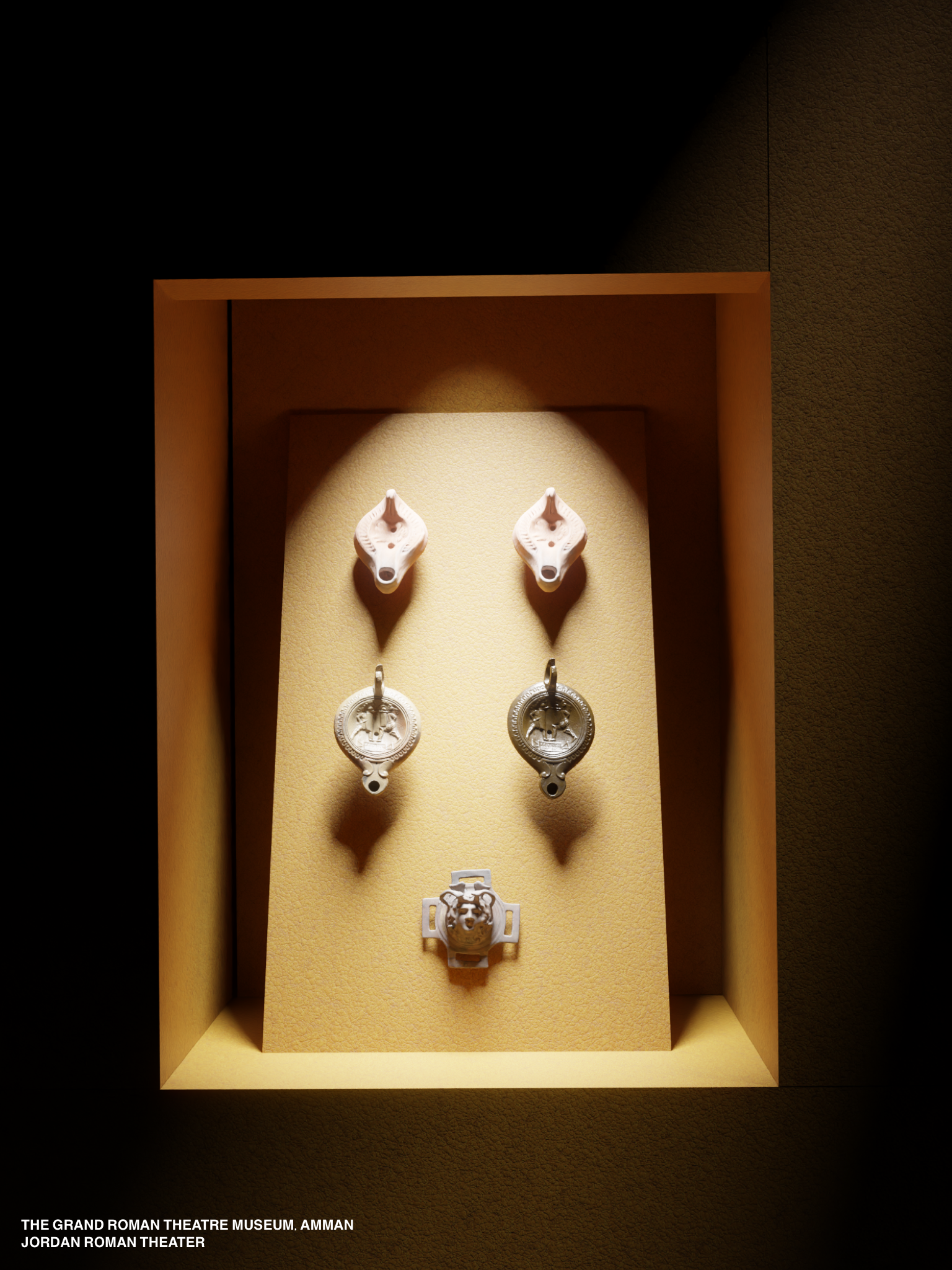
Rather than treating these items as secondary or fragmentary, the curatorial strategy elevates them as primary evidence of Roman life and performance culture. Each object is given spatial and visual importance through carefully designed display cases that emphasize white space, clarity, and isolation. This approach allows even the smallest artifact to be read, appreciated, and interpreted as a significant historical trace rather than a supporting element.
Display Design: White Space and Visual Restraint
Display cases are conceived as quiet, controlled environments. White space is used intentionally to slow the visitor’s pace, direct attention, and enhance the perceived value of each object. Labels and interpretation are concise and selective, ensuring that the physical presence of the artifact remains central.
This restraint reflects international museum standards and reinforces the museum’s intellectual seriousness, shifting focus from accumulation to interpretation.
Integrated Three-Dimensional Interpretive Elements
To compensate for the absence of monumental originals and to enhance spatial experience, the museum incorporates integrated three-dimensional interpretive elements. These include sculptural replicas, reconstructed reliefs, and architectural fragments that reference comparable Roman theatre material from regional and international collections.
These elements are not presented as substitutes for originals, but as interpretive tools that restore scale, volume, and bodily presence within the space. They provide visitors with a physical and spatial understanding of Roman theatrical culture that small artifacts alone cannot fully convey.
Dual Approach to Replicated Material
Artificially introduced elements follow two distinct curatorial approaches:
1. Historically Faithful Replications
These are accurate reproductions of known Roman artifacts, reliefs, masks, or architectural details. Their surface treatment, proportions, and materiality are designed to closely resemble ancient originals, allowing visitors to visually and spatially engage with forms otherwise inaccessible to the site.
2. Contemporary Interpretive Forms
Alongside faithful replicas, the museum incorporates modern sculptural forms that echo the volume, silhouette, or structure of ancient artifacts without imitating their aged surfaces. These contemporary objects serve as experiential devices rather than historical claims, emphasizing form, mass, and presence while remaining visually distinct from authentic material.
This dual strategy maintains transparency, avoids historical confusion, and enriches the visitor’s sensory experience.
Experience-Driven Curation
Ultimately, the curatorial methodology is experience-driven. The objective is not to recreate a conventional archaeological storehouse, but to construct a layered encounter between material evidence, spatial atmosphere, and interpretive clarity. By combining authentic fragments, disciplined display design, and carefully integrated three-dimensional elements, the museum delivers a complete and immersive experience within a modest physical footprint.
This approach allows the National Roman Theatre Museum – Amman to operate with intellectual integrity, visual impact, and long-term sustainability, while respecting both institutional limitations and archaeological responsibility.
Project Structure and Format
The National Roman Theatre Museum – Amman is conceived as a hybrid cultural project combining permanent interpretation with adaptable, time-based programming. Its structure is designed to ensure continuity, renewal, and long-term relevance.
Permanent Museum Framework
The core of the project is a permanent curatorial and spatial reinterpretation of the existing museum spaces. This includes the renovation and reprogramming of the corridor, central hall, and inner rooms according to a unified interpretive vision. Permanent displays establish the museum’s identity, scholarly foundation, and long-term narrative, ensuring consistency and institutional stability.
Temporary and Rotating Displays
The central hall functions as a flexible exhibition space capable of hosting temporary or rotating displays. This allows the museum to introduce focused themes, borrowed material, or experimental interpretations without altering the permanent structure. Temporary displays support periodic renewal, public engagement, and curatorial flexibility.
Publication and Catalog Production
The project includes the development of a physical and digital catalog serving both documentation and outreach purposes. The catalog presents the museum’s curatorial vision, selected artifacts, and interpretive essays, functioning as a lasting reference as well as a communication tool supporting national and international visibility.
Opening Event and Institutional Engagement
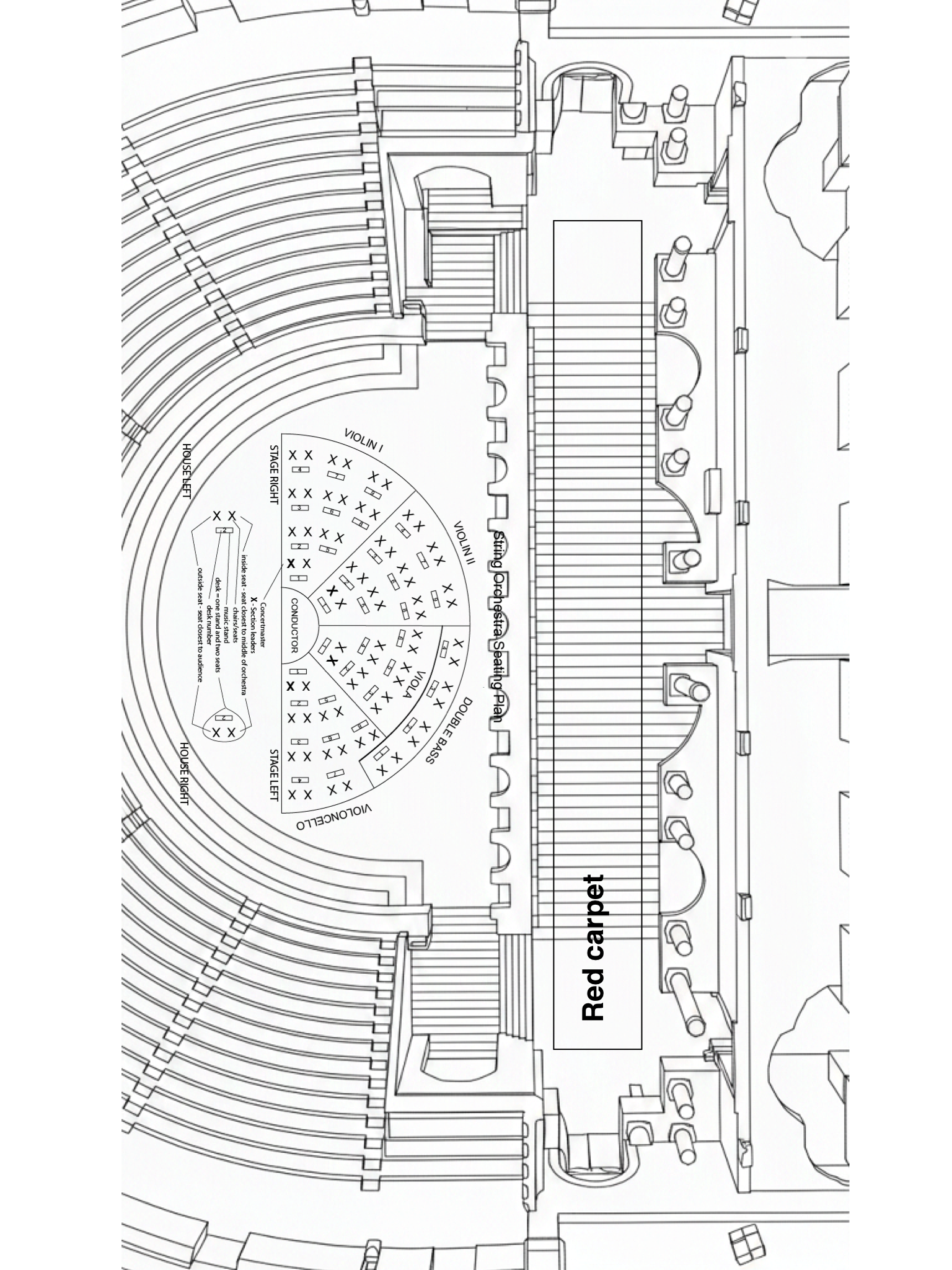
An official opening event marks the launch of the museum, conceived as a cultural and institutional gathering rather than a promotional ceremony. The event brings together representatives from international organizations, including the United Nations and the World Bank, alongside cultural experts, academics, and invited guests. This moment formally positions the museum within a global cultural and development context.
[هَمْس — قَافِيَة: (ـور)]
هُنَا…
حَيْثُ يَمْضِي الزَّمَانُ وَلَا يَدُورْ
وَحَيْثُ يَبْقَى الأَثَرُ نُورْ
حِجَارَةٌ
تَحْمِلُ الصَّوْتَ
وَتَحْفَظُ الدُّهُورْ
[دُخُولُ الأَوْتَار — نَفْسُ القَافِيَة]
قَبْلَ الأَسْمَاءِ
كَانَ لِلأَرْضِ حُضُورْ
وَقَبْلَ الصَّوْتِ
كَانَ الصَّمْتُ شُعُورْ
فِي الظِّلِّ
وُلِدَ الدَّوْرْ
وَبِالنَّفَسِ
اِكْتَمَلَ الظُّهُورْ
[صُعُود — صَوْتٌ نِسَائِيّ، قَافِيَة أَنْعَم (ـار)]
لَسْنَا بَدْءَ المَسَارْ
وَلَا آخِرَ الاِنْتِظَارْ
نَحْنُ خَطْوَةُ نُورٍ
بَيْنَ آثَارٍ… وَآثَارْ
نَحْمِلُ النَّظَرَ القَدِيمْ
وَحُلْمَ الغُبَارْ
وَنُسَلِّمُهُ لِلضِّيَاءِ
لِيَصِيرَ اِنْتِصَارْ
[الذِّرْوَة — الجَمِيع، قَافِيَة (ـود)]
هُنَا،
يَصِيرُ الجَسَدُ وُجُودْ
وَيَصِيرُ الصَّوْتُ خُلُودْ
وَيُصْبِحُ الوُقُوفُ
عَهْدًا مَمْدُودْ
مَا كَانَ لَحْظَةْ
صَارَ مَوْعُودْ
وَمَا كَانَ ظِلًّا
صَارَ شُهُودْ
[الخَاتِمَة — قَافِيَة هَادِئَة (ـان)]
نَفْتَحُ البَابَ
لَا لِلأَمْسِ
بَلْ لِلآنْ
نُعِيدُ الظِّلَّ إِلَى مَكَانِهِ
وَنَقُولُ لِلزَّمَانْ:
تَعَالَ…
هَذَا أَمَانْ
Opening Ceremony — A Living Threshold
The opening of the Roman Theatre Museum is conceived not as a formal inauguration, but as a carefully staged moment of cultural continuity. Set within the Roman Theatre itself, the ceremony draws from the language of performance, sound, and collective presence—echoing the civic and theatrical role the site once played in public life.
A short orchestral and vocal composition, developed specifically for the opening, sets the tone. Rather than narrating history, it gestures toward it—allowing space, shadow, and sound to re-activate the theatre as a living structure rather than a static monument. The ceremony functions as a threshold: between past and present, architecture and performance, memory and experience.
Though modest in scale, the museum’s opening is intentionally symbolic. It positions the institution not only as a historical repository, but as a cultural actor—one that acknowledges Jordan’s layered Greco-Roman heritage through contemporary expression. This moment is designed to resonate beyond the site itself, attracting regional and international cultural, architectural, and fashion media, and establishing the museum’s identity from its first public breath.